Dental disease in dogs is one of the most common health problems vets see.
Most owners never notice it until it’s already advanced. Bad breath is often the first clue, but it’s rarely the only sign. Here’s what to watch for, and how to protect your dog’s teeth.
Why Dental Disease Is So Common in Dogs
Plaque builds up on a dog’s teeth every single day, just like ours. Without regular brushing, that plaque hardens into tartar within days. Tartar then irritates the gums and creates space for bacteria to thrive.
Most dogs show some sign of dental disease by age three. Small breeds tend to struggle more, since their teeth are often crowded. Genetics, diet, and chewing habits all play a role too.
Age adds risk as well. Senior dogs often carry years of untreated plaque buildup. Regular checkups become even more important as your dog gets older.
How Plaque Turns Into a Bigger Problem
Once tartar sits below the gumline, it triggers inflammation called gingivitis. Left alone, gingivitis can progress into periodontal disease. That stage often means permanent damage to the gums and bone around each tooth.
 Breeds That Need Extra Dental Attention
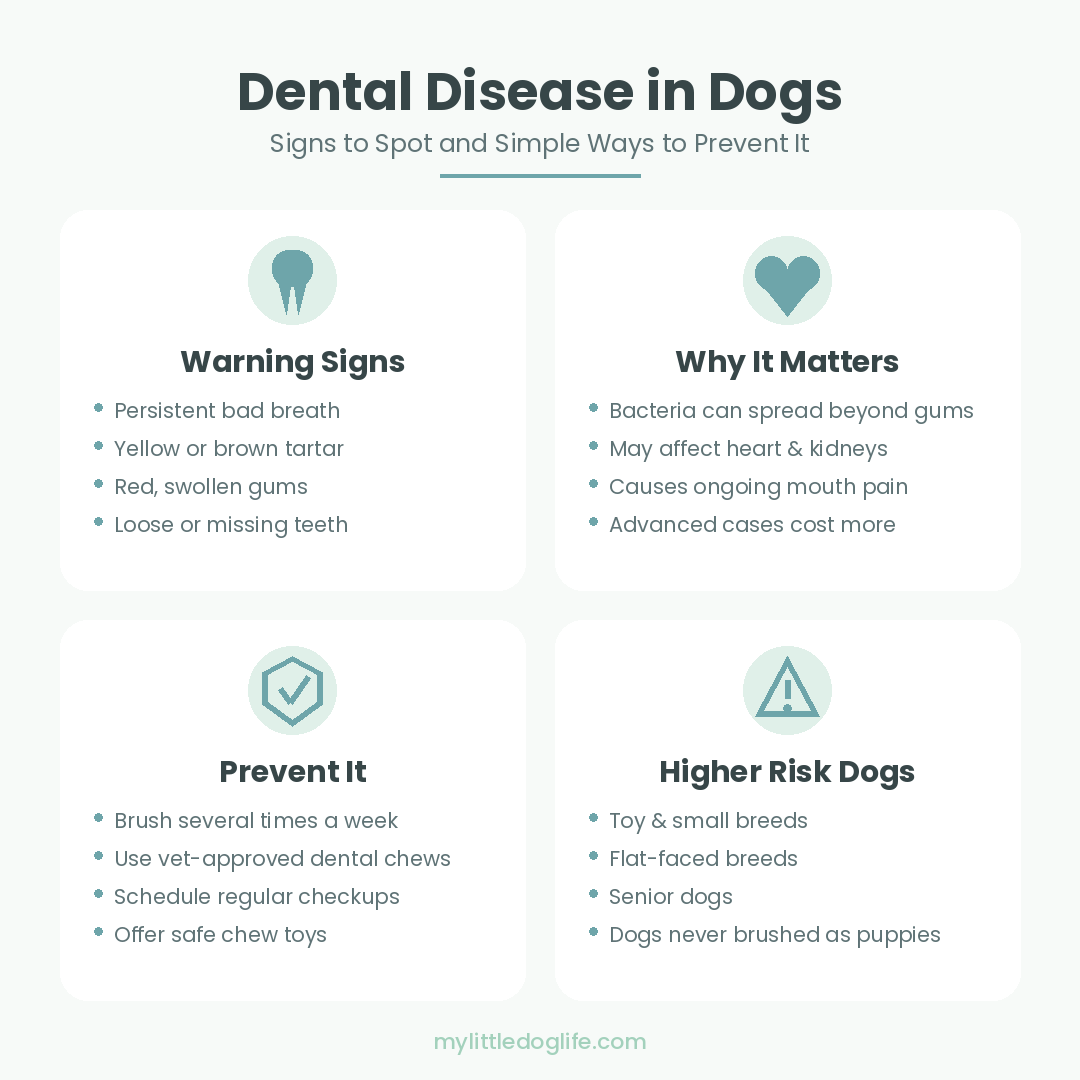
Some breeds face higher dental risk than others. Toy and small breeds, like Yorkies, Chihuahuas, and Dachshunds, often have crowded teeth that trap plaque. Their teeth are simply too big for their small jaws.
Flat-faced breeds like Pugs and Bulldogs face similar crowding issues. Larger breeds aren’t immune either, especially if brushing habits started late. No matter the breed, consistent care makes the biggest difference.
Signs of Dental Disease in Dogs to Watch For
Dogs are experts at hiding pain, so subtle signs matter. Catching these early can spare your dog a lot of discomfort down the road.
- Persistent bad breath
- Yellow or brown buildup on teeth
- Red, swollen, or bleeding gums
- Loose or missing teeth
- Pawing at the mouth or face
- Dropping food or chewing on one side
Reduced appetite can also signal mouth pain. If your dog suddenly avoids hard kibble or chew toys, a dental check is worth scheduling. Sudden weight loss alongside these signs deserves a prompt vet visit.
Why It Matters Beyond Bad Breath
Dental disease isn’t just a cosmetic issue. Bacteria from infected gums can enter the bloodstream. Over time, that bacteria may affect the heart, kidneys, or liver.
Untreated dental pain also affects quality of life. Dogs may eat less, become withdrawn, or act irritable. A healthy mouth supports a healthier dog overall.
Neglected dental disease can also get expensive. Advanced cases sometimes need multiple extractions under anesthesia. Regular care now is almost always cheaper than treatment later. That makes prevention a smart investment, not just a nice-to-have.
How Vets Diagnose and Treat Dental Disease
Your vet will usually start with a visual exam of the teeth and gums. Many cases also need a professional cleaning done under anesthesia. This lets the vet safely clean below the gumline, where problems often hide.
Dental X-rays can reveal damage that isn’t visible on the surface. In more advanced cases, a vet may need to remove a badly damaged tooth. Never attempt to treat dental disease at home. Always work with a licensed veterinarian for diagnosis and care.
Anesthesia can feel scary to consider, especially for senior dogs. Modern veterinary monitoring makes these procedures much safer than owners often expect. Ask your vet about pre-anesthetic bloodwork if you have concerns. This screening helps catch any hidden risks before the procedure begins.
Dental Disease and Diet
What your dog eats can influence dental health too. Dry kibble creates some mechanical cleaning action, though it isn’t a substitute for brushing. Sticky, sugary treats tend to cling to teeth and feed bacteria.
Some prescription dental diets are formulated to reduce tartar buildup. Ask your vet whether one might suit your dog’s needs. Fresh water and appropriate chew toys round out a tooth-friendly routine.
Wet food is gentler on the teeth structurally, but it doesn’t clean as well as some kibble claims to. Neither diet type replaces brushing on its own. Talk to your vet about balancing dental care with your dog’s overall nutrition needs.
Preventing Dental Disease in Dogs
Prevention is far easier, and cheaper, than treatment. A few consistent habits make a real difference over time.
- Brush your dog’s teeth several times a week
- Offer dental chews approved by your vet
- Schedule regular veterinary dental checkups
- Provide safe chew toys that support gum health
- Ask your vet about dental-specific diets
- Watch for early signs between checkups
Getting Started With Brushing
Use a toothbrush and toothpaste made just for dogs. Human toothpaste can upset a dog’s stomach, so it’s never a safe substitute. Start slowly, and reward your dog for staying calm during each session.

Photo: Gareth1953 All Right Now (Openverse, CC BY)
Other Dental Products Worth Trying
Water additives can help reduce bacteria between brushings. Dental wipes offer a gentler option for dogs who resist a toothbrush. Look for products carrying the Veterinary Oral Health Council seal of acceptance.
Common Mistakes
- Waiting for bad breath before scheduling a checkup
- Using human toothpaste or hard human toothbrushes
- Assuming small dogs don’t need brushing as often
- Skipping annual dental exams once symptoms fade
- Choosing chew toys that are too hard and can crack teeth
Expert Tips
- Start brushing early, even with puppies, to build the habit
- Look for the Veterinary Oral Health Council seal on dental products
- Keep a simple log of checkup dates and any changes you notice
- Pair brushing with a favorite treat to build positive associations
Tip: Lift your dog’s lip once a week for a quick at-home gum check between vet visits.
Frequently Asked Questions
Can dental disease in dogs be reversed?
Early gingivitis often improves with cleaning and brushing. More advanced periodontal disease usually causes damage that can’t fully reverse, so early care matters most.
How often should a dog’s teeth be brushed?
Daily brushing is ideal, but several times a week still helps. Even a small routine is far better than none at all.
Are dental chews enough on their own?
Dental chews can help reduce plaque, but they don’t replace brushing. Combining both gives your dog the best protection.
What age should dental checkups start?
Vets often recommend a first dental check during puppy vaccination visits. Regular exams should continue throughout your dog’s life.
Summary
Dental disease in dogs is common, but it’s also very preventable. Watch for early signs, and don’t wait for bad breath to act.
Regular brushing, vet checkups, and the right chew toys go a long way. A little routine now can spare your dog pain later. Your dog’s whole body benefits from a healthy mouth, not just their smile.
References
PawLife is written and edited by a dog owner who researches every topic using veterinary and canine-behavior sources (AKC, AVMA, ASPCA) before publishing. We are not veterinarians — this article is for general information only and is not a substitute for professional veterinary advice. Always consult your vet about your dog's specific health or behavior needs. Learn more about us.