Resource guarding in dogs means your dog stiffens, growls, or snaps to protect food, a toy, or a favorite spot.
It’s a normal instinct, not proof of a “bad” dog. Left unchecked, though, it can turn into a real bite risk. Here’s the good news: most cases get better with a few simple training steps.
What Resource Guarding in Dogs Actually Looks Like
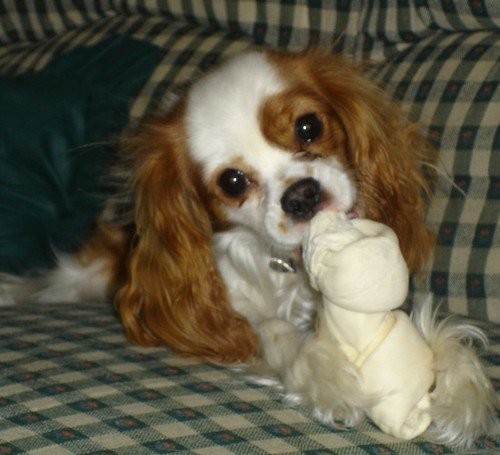
Resource guarding shows up in small moments you might miss at first. Your dog freezes over his bowl. He curls his lip when you walk near his bone. Or he grabs a sock and dashes under the bed.
These are all warning signs, not random quirks. Dogs guard things that feel valuable to them, and that value is personal. One dog might guard a chew toy but not his dinner. Another might guard his bed but nothing else.
Turns out, the behavior sits on a spectrum. Mild guarding might just be a hard stare or a stiff body. Serious guarding includes growling, snapping, or an actual bite. Either way, it’s worth addressing early.
Guarding isn’t only about food or toys. Some dogs guard people, a favorite couch spot, or even doorways. Others only guard specific high-value items, like a stolen tissue or a raw bone. Knowing your dog’s specific triggers is the first step toward fixing the habit.
Why Resource Guarding in Dogs Happens
So, why does this happen in the first place? Guarding is rooted in survival instinct. In the wild, protecting food and resources meant staying alive.
Puppies who competed with littermates for food often carry guarding habits into adulthood. Dogs adopted from shelters or rescues may have learned to guard meals during a time of scarcity. Even well-fed, well-loved dogs can develop the habit if a resource is ever taken away too abruptly.
Genetics play a role too. Some breeds are simply more prone to possessive behavior. But nurture matters just as much as nature here. A dog’s early experiences shape how strongly this instinct shows up later.
Multi-dog households add another layer. Dogs may compete with each other, not just with people. Feeding dogs separately and giving each one their own toys can lower tension. This small change often prevents guarding before it even starts.
How to Stop Resource Guarding in Dogs
The goal isn’t to punish your dog for guarding. Punishment tends to make the behavior worse, not better. Instead, you want to teach your dog that people approaching his stuff is a good thing, not a threat.
Start With Trading Up
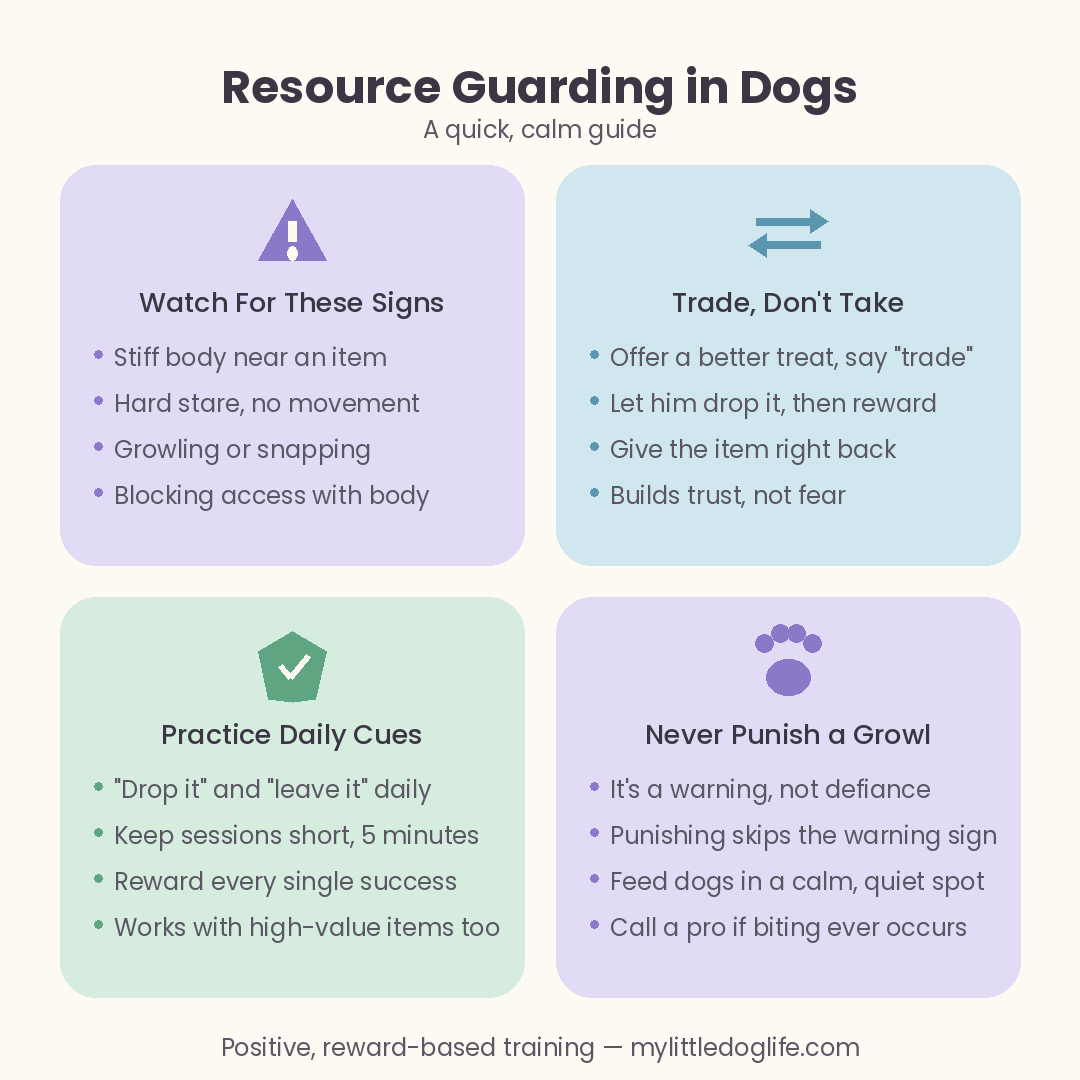
Approach your dog while he has a low-value item, like an old toy. Offer a much better treat, such as small pieces of chicken or cheese. Say “trade” as you offer it.
Let him drop the item and take the treat. Give the toy right back afterward. This teaches him that giving something up leads to good things, not loss.
Practice “Drop It” and “Leave It”
These two cues are lifesavers for guarding-prone dogs. Practice them daily during calm, low-stress moments. Reward generously every single time your dog listens.
Once these cues are solid, they work even with high-value items. That means you can safely retrieve a stolen sock or a chicken bone off the sidewalk.
Feed in a Calm, Quiet Spot
Give your dog space and quiet during meals. Avoid hovering, reaching into the bowl, or letting kids crowd him while he eats. As trust builds, you can gradually add your presence back in short, positive doses.
Build Trust With Daily Handling Exercises
Touch your dog’s food bowl gently while he eats, then walk away. Add a treat to his bowl now and then during meals. These small, positive interruptions teach him that hands near his stuff mean good things, not danger.
Keep sessions short and upbeat. Never force the interaction if your dog looks tense or stiff. Slow, steady progress beats rushing and causing a setback.
Tip: Never punish a growl. A growl is your dog’s way of communicating discomfort before things escalate. Punishing it can teach him to skip the warning and go straight to a bite.
Staying consistent matters more than speed here. Short, positive sessions a few times a day beat one long, stressful one. If you’re also working through puppy biting habits, these same calm, reward-based principles carry over well.
| Mild Signs | Serious Signs |
|---|---|
| Stiff body near an item | Growling or snarling |
| Eating faster when approached | Snapping at hands or faces |
| Turning body to block access | Biting or lunging |
| Hard stare, no movement | Guarding multiple items and people |
When Resource Guarding in Dogs Needs a Professional
Some cases need more than home training. If your dog has ever bitten, or if growling escalates quickly, stop the DIY approach right away. A certified trainer or veterinary behaviorist can build a safe, structured plan.
This is especially important in homes with kids. Small children can’t read canine body language the way adults can. Professional guidance keeps everyone safer while your dog learns new habits.
Dogs working through leash-related tension often benefit from the same structured, professional support. If your dog also struggles on walks, our guide on stopping leash reactivity covers similar calm, step-by-step methods.
Common Mistakes With Resource Guarding in Dogs
- Punishing growls instead of listening to them
- Taking items away without offering a trade
- Letting kids approach a dog during meals or chew time
- Skipping daily practice of “drop it” and “leave it”
- Ignoring mild signs until they become serious ones
Expert Tips for Resource Guarding in Dogs
- Keep training sessions short, five minutes is plenty
- Use treats far tastier than the item being guarded
- Stay calm and quiet during every training rep
- Track progress with a simple daily journal
- Involve every family member so cues stay consistent
Frequently Asked Questions
Is resource guarding a sign of aggression?
Not exactly. It’s a protective instinct, not general aggression. Most dogs that guard resources are friendly and relaxed in every other situation.
Can resource guarding be fully cured?
Many mild cases improve a lot with consistent training. Some dogs will always need a bit of extra management around high-value items, and that’s okay.
Should I take toys away to show I’m in charge?
No. This outdated approach usually backfires and increases guarding. Trading and positive reinforcement work far better than force.
Is resource guarding more common in certain breeds?
It can show up in any breed or mix. Genetics may raise the odds slightly, but early experience matters more than breed alone.
What should I do if my dog guards items from other dogs?
Separate feeding areas and individual toys help a lot. Supervise playtime and remove high-value items when multiple dogs are together. A trainer can help if tension keeps building between your dogs.
Summary
Resource guarding in dogs is common, manageable, and rarely a lost cause. Trading up, practicing solid cues, and staying calm during meals go a long way. Watch for mild signs before they turn serious. Don’t wait to call a professional if biting is ever involved. With patience, most dogs learn that sharing space with you is nothing to worry about.
References
PawLife is written and edited by a dog owner who researches every topic using veterinary and canine-behavior sources (AKC, AVMA, ASPCA) before publishing. We are not veterinarians — this article is for general information only and is not a substitute for professional veterinary advice. Always consult your vet about your dog's specific health or behavior needs. Learn more about us.