Separation anxiety in dogs is a real behavior problem, not just bad manners. It often shows up the moment you grab your keys. Your dog might bark, pace, or chew the doorframe before you even leave. That kind of panic is exhausting for both of you. Here’s the good news: most dogs can learn to feel calmer when they’re home alone.
This isn’t about a dog being “bad” or spiteful. In fact, it’s fear, plain and simple. Once you understand what’s driving it, you can start making real progress. First, though, it helps to know what the signs actually look like.

Signs of Separation Anxiety in Dogs
Dogs can’t tell us how they feel, so we have to read their behavior instead. Generally speaking, dogs with separation anxiety show a pretty predictable pattern. It usually starts within minutes of you leaving, not hours later.
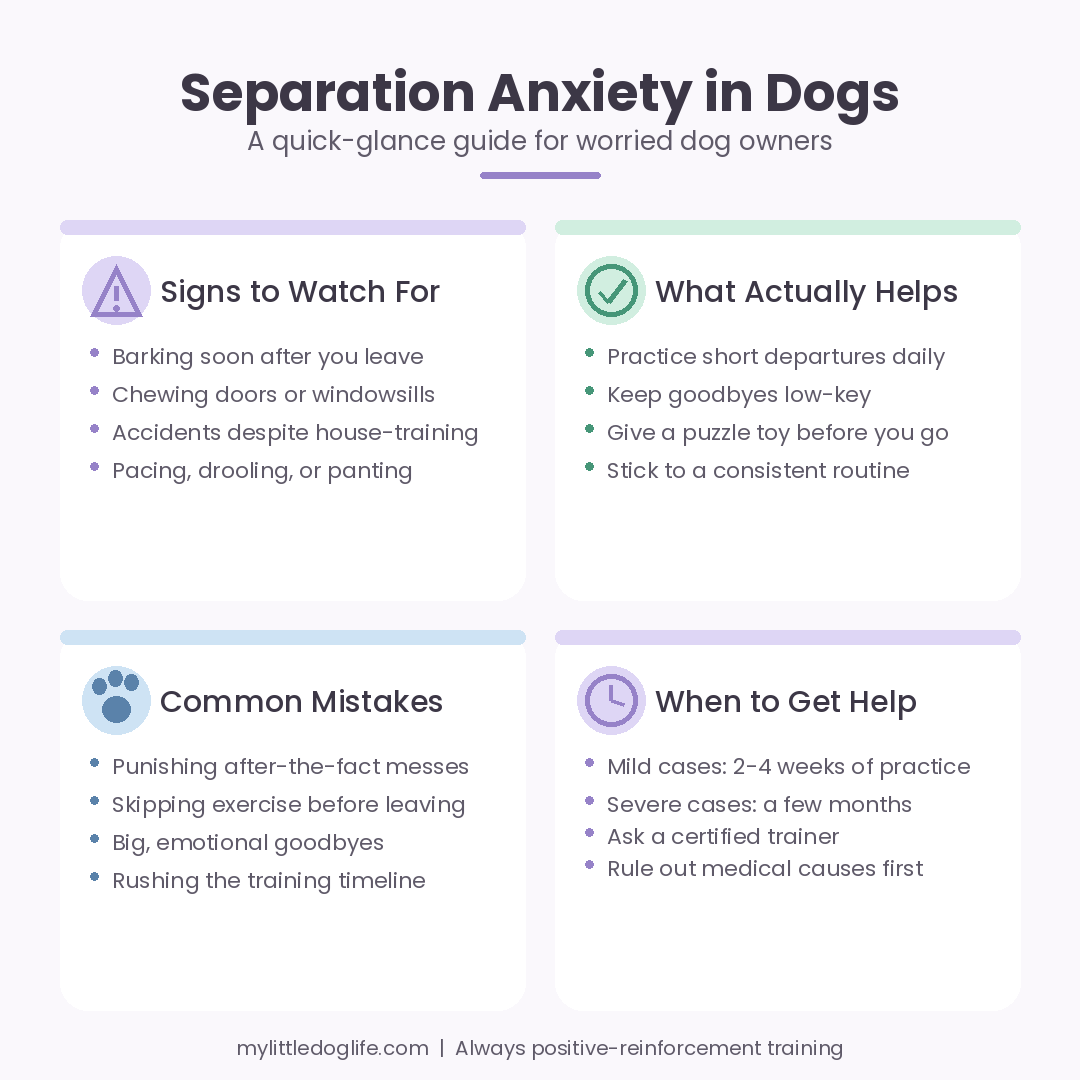
- Barking, howling, or whining that starts soon after you leave
- Chewing on doors, windowsills, or furniture near exits
- Accidents indoors even though your dog is fully house-trained
- Pacing, drooling, or panting that isn’t related to heat
- Trying to escape through doors, windows, or crates
On top of that, some dogs get so worked up they hurt their teeth or paws trying to get out. If you’re seeing any of this, it’s worth ruling out medical causes first. A quick check-in with your vet can confirm whether anxiety, and not a health issue, is behind the behavior.
Why Some Dogs Develop It
There’s rarely one single cause. Genetics play a role, and so does a dog’s early life experience. For example, dogs adopted from shelters seem especially prone to it. The same goes for dogs who’ve gone through a big change, like a move or a new work schedule.
Meanwhile, puppies who were never taught to be comfortable alone can carry that habit into adulthood. Because of this, prevention through gentle crate training early on really does help. Even so, older dogs can absolutely still learn to cope better with practice.
Stress doesn’t always show up as obvious panic, either. Some anxious dogs develop skin issues or hot spots from constant licking and chewing when they’re stressed. So, if your dog’s skin problems seem to flare up around your schedule, anxiety might be part of the picture.
How to Help a Dog With Separation Anxiety
The goal here is to slowly teach your dog that being alone is safe, not scary. This takes patience, but it genuinely works for most dogs. Punishment never belongs in this process, since it only adds more fear on top of what’s already there.
Start With Gradual Desensitization
First, practice leaving for just a few seconds at a time. Then, slowly stretch that time out over days and weeks. As a result, your dog learns that your absence is short and predictable, not permanent.
Keep Goodbyes and Hellos Low-Key
Big, emotional goodbyes actually make things worse. Instead, keep your exits and entrances calm and boring. Your dog will pick up on your energy, so a relaxed tone matters more than you’d think.
Build Positive Associations
Give your dog a stuffed food toy or puzzle feeder right before you leave. This gives them something enjoyable to focus on. For instance, a frozen food toy can turn “you’re leaving” into “something good just happened.” So, the moment starts to feel like a reward instead of a threat.
Here’s the thing: this same positive approach shows up in other training too. It’s the same method used for puppy biting stages. In other words, reward-based methods build trust, and trust is exactly what an anxious dog needs.
- Practice short, casual departures daily, even on days you don’t need to leave
- Give a special toy or chew that only appears when you’re gone
- Keep a consistent routine for feeding, walks, and bedtime
- Consider calming aids only after talking with your vet
- Ask a trainer about crate training if your dog finds it comforting
Tip: Record your dog on video while you’re out. It’s the easiest way to see how they’re really doing and track real progress over time.
Generally speaking, dogs with mild anxiety improve within a few weeks of consistent practice. However, more severe cases often need help from a certified professional dog trainer or veterinary behaviorist. There’s no shame in asking for backup here.
It also helps to keep your dog physically tired before you leave. This works much like leash reactivity training, where a calmer dog settles faster overall. After that, a short walk or play session before you go can take the edge off.
Common Mistakes
- Punishing your dog for accidents or destruction that happened while you were gone
- Leaving for long stretches before your dog is ready for that much time alone
- Making a big fuss during goodbyes, which raises your dog’s stress level
- Skipping exercise before you leave, which leaves excess energy with nowhere to go
- Assuming your dog will just “grow out of it” without any training
Expert Tips
- Start desensitization training on a weekend, so you’re not rushed
- Use baby gates instead of a closed door if your dog fears confinement
- Try background noise, like a TV or white noise machine, to mask outside sounds
- Track your dog’s stress signals with a journal or video log
- Loop in a professional early if progress stalls after a few weeks
Frequently Asked Questions
How long does it take to fix separation anxiety in dogs?
It varies a lot by dog. Mild cases often improve in two to four weeks of daily practice. That said, more severe anxiety can take several months of steady, patient work.
Can separation anxiety go away on its own?
Usually not without some kind of training. In fact, it often gets worse if it’s left unaddressed. Because of this, early and gentle intervention makes a real difference.
Should I get a second dog to help with the anxiety?
Not necessarily. Separation anxiety is usually about missing you specifically, not about being alone in general. So, another dog often doesn’t solve the core problem.
Is crate training helpful for separation anxiety in dogs?
It can be, but only if your dog already sees the crate as a safe space. Otherwise, forcing crate time can make anxiety worse. Even so, introducing it slowly with positive rewards usually works well.
Summary
Separation anxiety is tough to watch, but it’s also very treatable. Start small, stay consistent, and keep every departure calm and low-key. Ultimately, patience and positive reinforcement matter more than any single trick. If progress stalls, a certified trainer or veterinary behaviorist can help you build a plan suited to your dog.
References
PawLife is written and edited by a dog owner who researches every topic using veterinary and canine-behavior sources (AKC, AVMA, ASPCA) before publishing. We are not veterinarians — this article is for general information only and is not a substitute for professional veterinary advice. Always consult your vet about your dog's specific health or behavior needs. Learn more about us.