Puppy biting is one of the most normal parts of raising a young dog, but that doesn’t make those needle-sharp teeth any less painful on your hands.
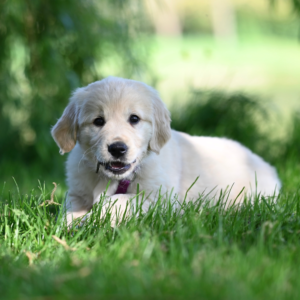
The good news is that puppy biting almost always fades with the right approach, and it rarely means your puppy is aggressive.
Most puppies bite because they’re exploring the world with their mouths, teething, or just plain overexcited. Here’s the thing: with a little consistency, you can teach your puppy that human skin is off-limits within a few weeks.
Why Puppies Bite in the First Place
Puppies don’t have hands, so their mouths do a lot of the work hands would do for a person. Chewing, mouthing, and nipping are how they investigate textures, play with littermates, and relieve the discomfort of new teeth coming in.
Teething usually runs from about 3 to 6 months old. During this window, biting often spikes because sore gums genuinely feel better with pressure on them. Overtiredness and overstimulation make it worse, too — a puppy who’s had too much excitement will often get “mouthy” right before a nap.
It’s Rarely About Aggression
True aggressive biting in puppies is uncommon. Most nipping comes from play, teething, or over-arousal rather than any intent to hurt you. That distinction matters because it changes how you respond.
Some breeds do mouth more than others. Herding breeds and retrievers, for example, were bred to use their mouths for work, so they often nip more during play. This doesn’t mean the training approach changes — it just means patience matters even more.
Bite Inhibition: The Skill You’re Actually Teaching
Bite inhibition means teaching your puppy to control the pressure of their mouth. Puppies learn this naturally while playing with littermates — a bite too hard gets a yelp and the fun stops.
You can recreate that lesson at home. So, the goal isn’t just “stop biting” — it’s teaching your puppy that any mouth-on-skin contact, hard or soft, makes the fun end immediately.
Step-by-Step: How to Stop Puppy Biting
These steps work best when used together, consistently, every time your puppy bites.
1. Freeze and Go Limp
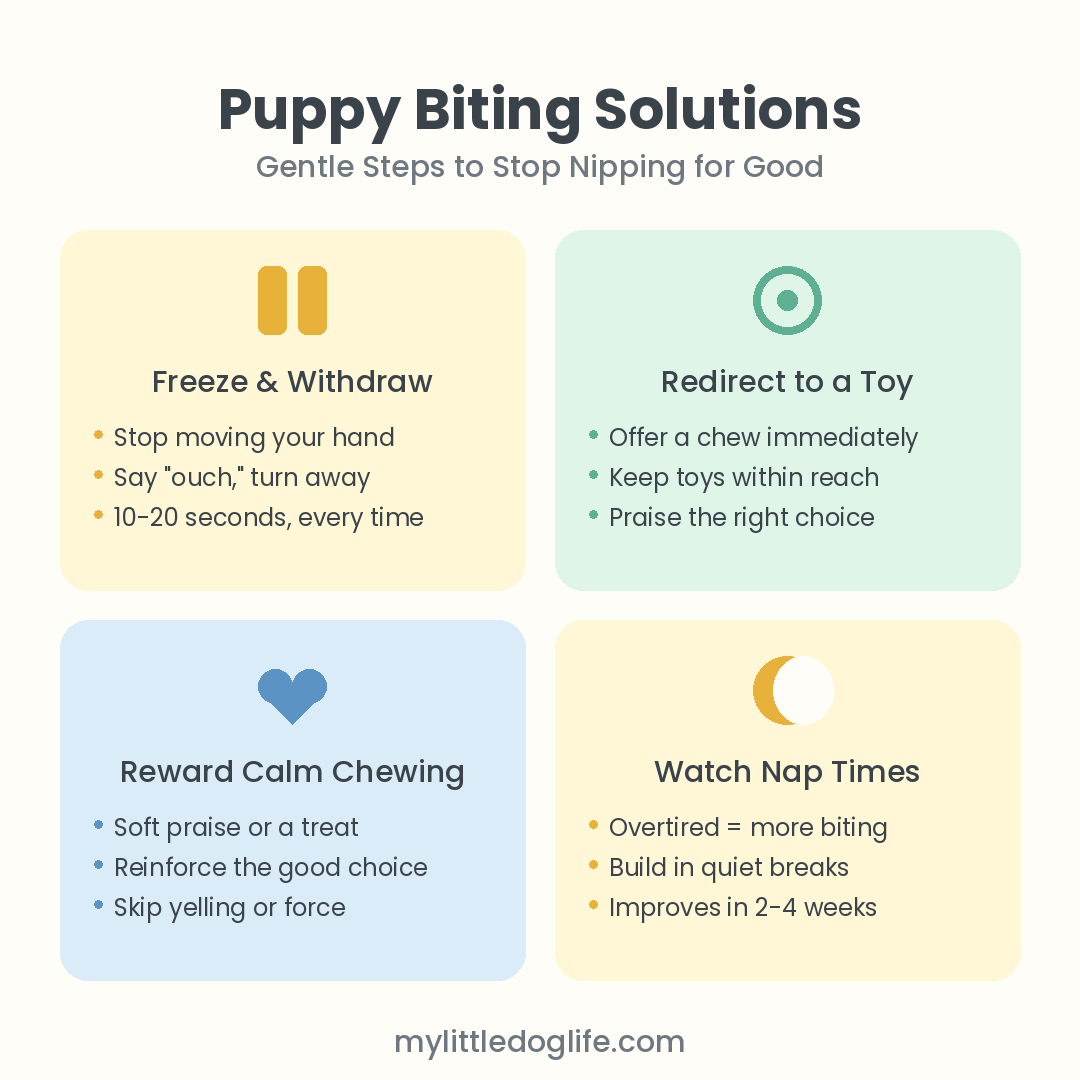
The instant teeth touch skin, stop moving your hand. Sudden movement looks like play to a puppy and often makes biting worse, not better.
2. Say “Ouch” and Withdraw Attention
Use a short, higher-pitched “ouch,” then calmly stand up and turn away for 10-20 seconds. This mimics how littermates respond, and it teaches your puppy that biting ends the fun.
3. Redirect to an Appropriate Chew
Immediately offer a chew toy or rope instead of your hand. Redirecting, rather than just saying no, gives your puppy a clear, allowed outlet for the urge to chew.
4. Reward the Calm Moment
Once your puppy chews the toy instead of you, praise softly or offer a small treat. Rewarding the right choice teaches faster than punishing the wrong one.
5. Manage Overtiredness
If biting spikes, check the clock. An overtired puppy often needs a nap more than a training session — a tired puppy is a bitey puppy.
6. Practice Gentle Handling Every Day
Spend a minute or two each day gently touching your puppy’s paws, ears, and mouth, pairing it with a treat. This builds tolerance for handling and makes your hands feel safe and rewarding, not just something to chew.
What to Do When Teeth Meet Skin
Consistency across the whole household matters here. If one person allows rough hand-play and another doesn’t, your puppy gets mixed signals and takes longer to learn.
Keep several chew toys within reach at all times — on the couch, by the door, in your pocket during walks. The faster you can redirect, the faster the lesson sticks.
Tip: Freeze crushed dog-safe treats or a wet washcloth for a soothing teething chew. The cold helps numb sore gums, which often cuts down on biting all by itself.
Avoid These Common Triggers
- Rough hand-wrestling or finger-wiggling games
- Loose, dangling sleeves, shoelaces, or hair
- Overstimulating play right before bedtime
- Long stretches without a chew toy nearby
Common Mistakes
- Yelling or physically correcting the puppy, which can increase fear or excitement-based biting.
- Pulling your hand away quickly, which often triggers a chase-and-bite instinct.
- Being inconsistent — allowing biting during rough play but scolding it other times.
- Waiting too long to redirect, so the puppy never learns the connection between biting and lost attention.
- Ignoring teething-related pain instead of offering appropriate chews.
Expert Tips
- Practice short, calm training sessions rather than long ones — puppies tire out fast.
- Use puppy playdates or puppy classes so your dog can practice bite inhibition with other dogs, too.
- Keep a chew toy in every room during the teething months.
- Track your puppy’s nap schedule — overtiredness is one of the most overlooked biting triggers.
- Stay patient. Most puppies show real improvement in the first two to four weeks of consistent redirection.
 Frequently Asked Questions
At what age does puppy biting usually stop?
Most puppies significantly reduce biting by 6 months old, once adult teeth are in and consistent training has been in place. Some individual dogs take a bit longer, especially high-energy breeds.
Is it normal for my puppy to draw blood?
Puppy teeth are extremely sharp, so minor nicks can happen even during normal play. If bites are frequent, hard, or paired with growling and stiff body language, talk to a veterinarian or a certified trainer to rule out anything beyond typical puppy behavior.
Should I use bitter spray on my hands?
Bitter-tasting sprays can help on skin or furniture as one tool among several, but they work best paired with redirection and consistent training, not as a stand-alone fix.
Will punishment make puppy biting stop faster?
No. Physical correction or yelling tends to backfire, either increasing fear-based biting or teaching your puppy that hands are something to be wary of. Positive, consistent redirection works faster and builds trust at the same time.
What if my puppy bites harder when excited during play?
Excitement-biting is common during games like fetch or tug. If your puppy’s mouth gets rough, calmly end the game for a short break rather than escalating the play. Puppies quickly learn that gentle play keeps the fun going.
Summary
Puppy biting is a normal, temporary stage rooted in teething, play, and exploration. Freezing on contact, redirecting to a chew toy, and rewarding calm behavior will teach your puppy bite inhibition within a few weeks of consistent practice. Puppy teeth are needle-sharp for a reason, and once your dog’s adult teeth settle in, most biting eases up on its own — though good dental habits matter for the long run, as covered in our guide to dental disease in dogs. And just like teaching a puppy not to bite, patience and consistency are the same tools that make techniques like leash training successful later on.
References
PawLife is written and edited by a dog owner who researches every topic using veterinary and canine-behavior sources (AKC, AVMA, ASPCA) before publishing. We are not veterinarians — this article is for general information only and is not a substitute for professional veterinary advice. Always consult your vet about your dog's specific health or behavior needs. Learn more about us.
Pingback: How to Stop Dog Jumping on People for Good - PawLife