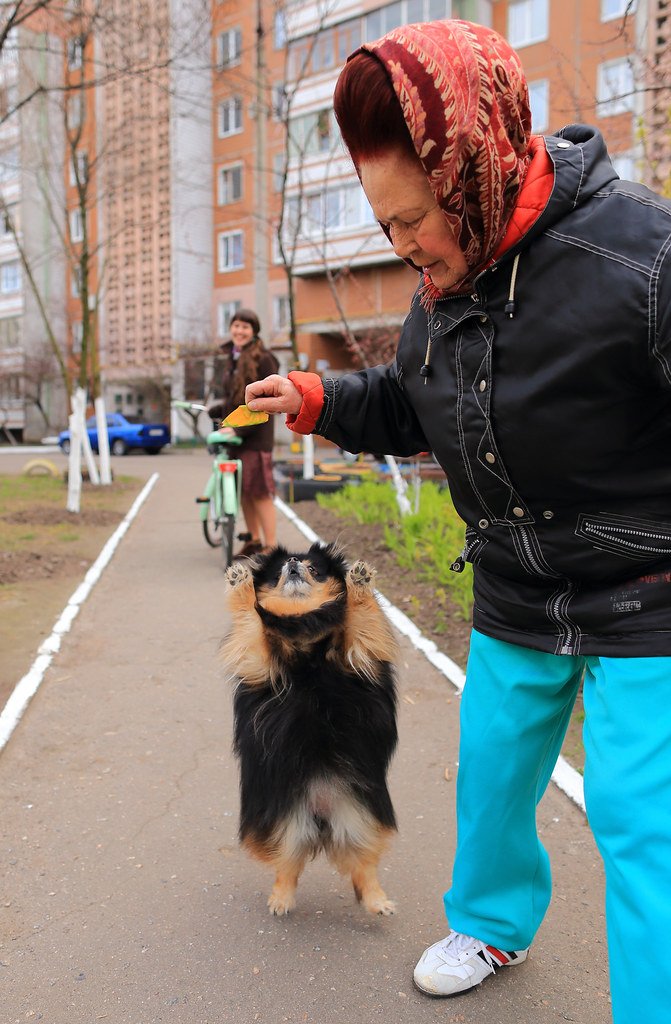
Dog jumping on people is one of the most common complaints owners bring up. It usually starts as an innocent greeting habit that got out of hand. Your dog isn’t being bad here. It’s just excited, and jumping works great at grabbing your attention.
Here’s the good news: this is one of the easier behaviors to fix with a little patience. Let’s walk through why it happens and exactly how to turn it around.
Dog Jumping on People: Why It Happens
In fact, most dogs jump because they want to greet you face-to-face. Wild canine relatives, for example, lick at the mouths of pack members returning home. Your dog is doing a version of that, just aimed higher.
On top of that, jumping gets rewarded more often than owners realize. A laugh, a pat, even a stern “down” still counts as attention in your dog’s mind. As a result, the behavior sticks around.
Puppies jump because they’re small and full of energy. Adult dogs often keep doing it simply because nobody taught them a better way to say hello. That said, this isn’t about dominance or bad manners in a moral sense.
It’s a learned habit, and learned habits can be replaced with new ones. In other words, you’re not fighting your dog’s personality here. So, you’re just teaching a new skill instead.
Some breeds do tend to jump more than others, especially high-energy, people-focused dogs. Even so, this isn’t a sign of aggression or a warning about a dog’s temperament. It’s simply excitement with nowhere else to go. That said, redirecting that energy is what the rest of this guide covers.
The Turn-Away Method: Teaching Four Paws on the Floor
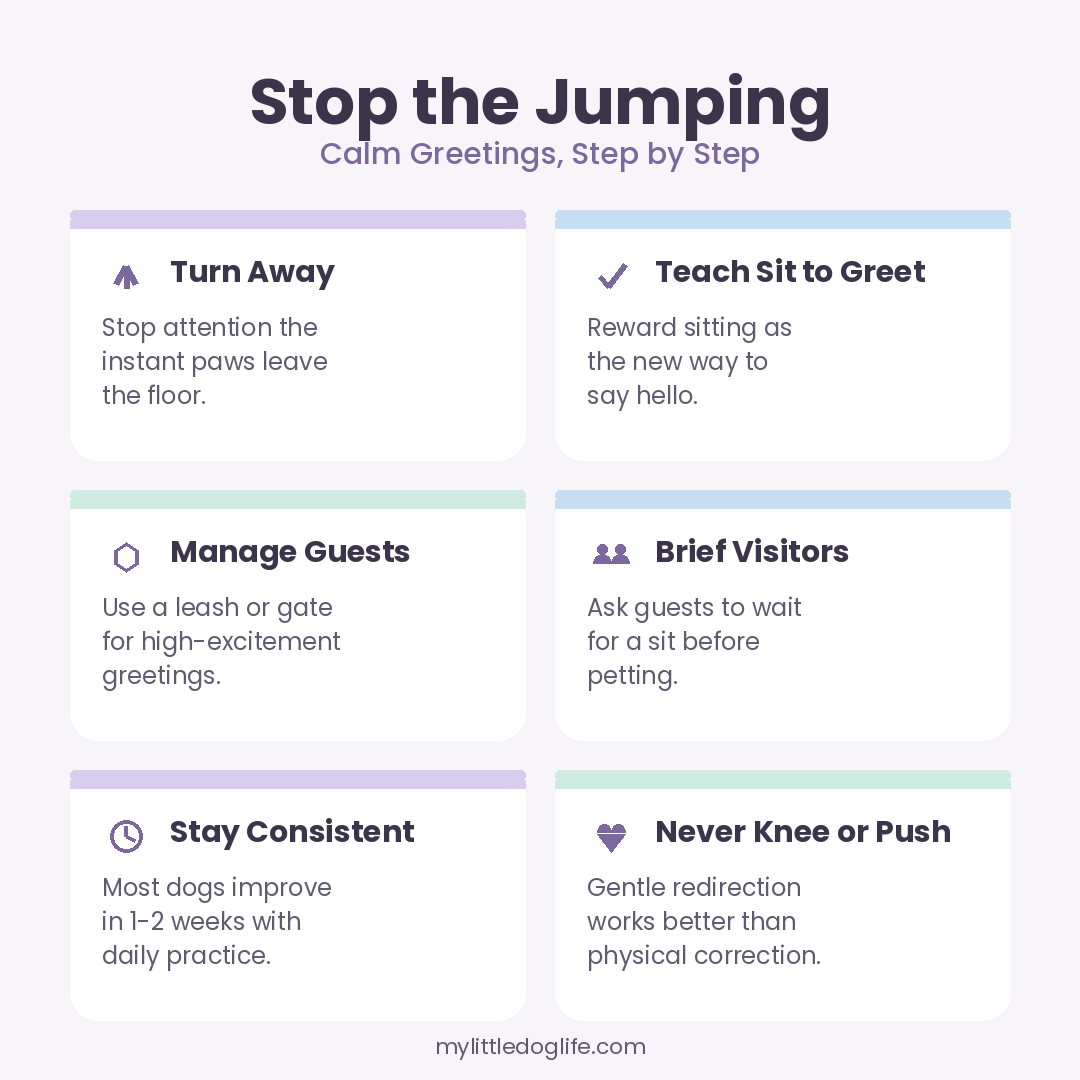
Here’s the thing: the simplest fix is also the most powerful one. Stop giving attention the moment paws leave the ground. Turn your body away, fold your arms, and stay quiet. No pushing, no eye contact, no talking.
The instant all four paws touch the floor again, turn back and calmly praise your dog. First, wait for the calm moment. Then, reward it right away so the connection is clear.
Because timing matters so much here, everyone in the house needs to use the same response. If one person allows jumping while another blocks it, your dog gets mixed signals. As a result, the habit takes longer to fade.
This method takes repetition, sometimes dozens of greetings, before it clicks. Even so, most owners see real improvement within one to two weeks of consistent practice.
Picture a typical greeting: you walk in, your dog launches up, and you instantly spin away without a word. After that, your dog circles back, sits, and gets calm praise. Next time, the jump comes a little less often. Over several days, calm greetings start to feel like the easier, more rewarding choice.
Teaching an Alternative Behavior: Sit to Greet
Turning away teaches your dog what not to do. But, giving your dog a sit to do instead tends to work even faster.
To begin with, start in a low-distraction setting. Ask for a sit before you open the door, before you crouch down, and before any greeting begins. Reward generously with small, high-value treats.
Practice this daily, even when no one is arriving. For instance, walk in from another room and ask for a sit before saying hello. Repetition in calm moments builds the habit for exciting ones.
If your dog has already worked through puppy biting, this training will feel familiar. In fact, both rely on redirecting excited energy into a calmer, rewarded behavior.
If your dog struggles to sit while excited, back up a step first. Practice the sit in a quiet room with zero distractions, and only add excitement once it’s solid. A leash can help too. It gives you a gentle way to prevent jumping while your dog learns the new routine.
Managing Jumping With Guests and Excited Moments
Guests arriving is often the hardest scenario to manage, since the excitement level spikes fast. So, a leash clipped on before the doorbell rings gives you control without any wrestling.
On top of that, a baby gate or tether near the entryway works well too. It keeps your dog at a safe distance while everyone settles in. Meanwhile, ask guests to ignore jumping completely and only greet once your dog is sitting.
Consistency from visitors matters just as much as consistency from family. So, it helps to give guests a quick heads-up before they walk in the door. A simple “please ignore jumping and wait for a sit” goes a long way.
Dogs that already struggle with separation anxiety or big arousal swings may need extra management, like a calming pre-greeting walk. Because of this, exercise before visitors arrive helps burn off that excess energy.
Small children and older adults deserve extra caution around a jumping dog, since a knock-down can genuinely hurt someone. For instance, keep young kids behind a gate until your dog settles down. Then, let them help with treats once four paws are calmly on the floor.
Staying Consistent: Getting the Whole Household on Board
In fact, consistency is really the whole game with this behavior. If jumping gets rewarded even occasionally, your dog will keep testing it, because occasional rewards are powerful.
Sit down with everyone in the household, kids included, and agree on one shared response. Practice the sit-to-greet routine together during a calm training session. For example, this works much like recall training or basic leash manners.
Ultimately, short daily sessions beat one long weekly one. Five minutes here and there, spread across the week, builds a stronger habit than a single 30-minute drill.
Generally speaking, dogs that get consistent rules from every family member learn faster and with far less confusion. Structure and routine, similar to what’s used in crate training, help your dog feel more settled overall.
Quick Checklist Before You Start Training
First, run through this short list so everyone’s on the same page before your next greeting.
- Agree on one shared response with everyone in the household.
- Next, keep small, high-value treats within reach near the front door.
- Practice sit-to-greet daily, not just when visitors arrive.
- Then, use a leash or gate to manage high-excitement greetings safely.
- Brief guests before they walk in so they respond consistently too.
Common Mistakes
- In fact, yelling or shouting “down” often reads as excited attention to your dog.
- Kneeing or pushing the dog away, which can turn into a rough game.
- Letting jumping slide when you’re in a rush, then correcting it other times.
- Even so, petting the dog while it’s still jumping still counts as a reward.
- Only practicing during actual greetings instead of calm, low-key moments.
Expert Tips
- Use pea-sized treats so your dog can eat quickly and stay engaged.
- For example, recruit a friend to practice doorbell greetings on repeat.
- Reward calm four-on-the-floor moments randomly throughout the day.
- To begin with, tire out a high-energy dog with a walk before guests arrive.
- Keep sessions short, five minutes or less, to hold your dog’s focus.
Frequently Asked Questions
Why does my dog jump on people even after training?
Usually, someone in the household is still rewarding it, even by accident. A quick pat or laugh reinforces the habit. Because of this, everyone needs to respond the same way, every time, for training to stick.
Is it okay to knee my dog when it jumps?
No, this isn’t a recommended method and can cause pain or fear. It also risks turning greetings into a rough physical game. So, turning away and rewarding a sit works better and stays completely gentle.
How long does it take to stop a dog from jumping on people?
Most dogs show real progress within one to two weeks of daily practice. That said, some dogs, especially high-energy breeds, take longer. Ultimately, consistency matters more than speed here.
Do certain breeds jump more than others?
Some breeds, particularly high-energy and highly social ones, do tend to jump more. Even so, jumping is a learned behavior in every breed, not a fixed trait. So, the same training approach works across the board.
Summary
Dog jumping on people is common, fixable, and rarely a sign of a badly behaved dog. It’s simply an excited greeting that got reinforced over time. First, remove the reward by turning away. Then, teach a sit as the new default greeting.
However, stay patient, stay consistent, and get the whole household using the same approach. Within a few weeks, most owners see a dog that greets people with four paws on the floor.
References
PawLife is written and edited by a dog owner who researches every topic using veterinary and canine-behavior sources (AKC, AVMA, ASPCA) before publishing. We are not veterinarians — this article is for general information only and is not a substitute for professional veterinary advice. Always consult your vet about your dog's specific health or behavior needs. Learn more about us.