Recall training for dogs is the single skill that turns a stressful walk into a relaxed one. A dog who reliably comes when called is safer off-leash and easier to manage anywhere.
If your dog has ever bolted after a squirrel while your voice vanished into thin air, you know the frustration. The good news? Recall is trainable at almost any age. It doesn’t need fancy gear, just treats, patience, and a bit of daily practice. So, let’s walk through exactly how to build it, step by step.
Why Recall Training Matters
A strong recall isn’t just a party trick. It can genuinely save your dog’s life near roads, wildlife, or other animals.
Because dogs are naturally curious, they’ll chase interesting smells and sounds without thinking twice. As a result, a dog with no recall faces real risk the moment a leash slips loose.
Even a single open gate can turn into an emergency without warning. On top of that, a reliable recall gives your dog more freedom. You can let them explore off-leash at the beach, knowing they’ll come back when it counts.
Here’s the thing: recall also builds trust between you and your dog. Every successful “come” reinforces that checking in with you is always worth it. Meanwhile, your dog learns that the world outside is more fun with you in it, not less.
Getting Started: Building the Foundation
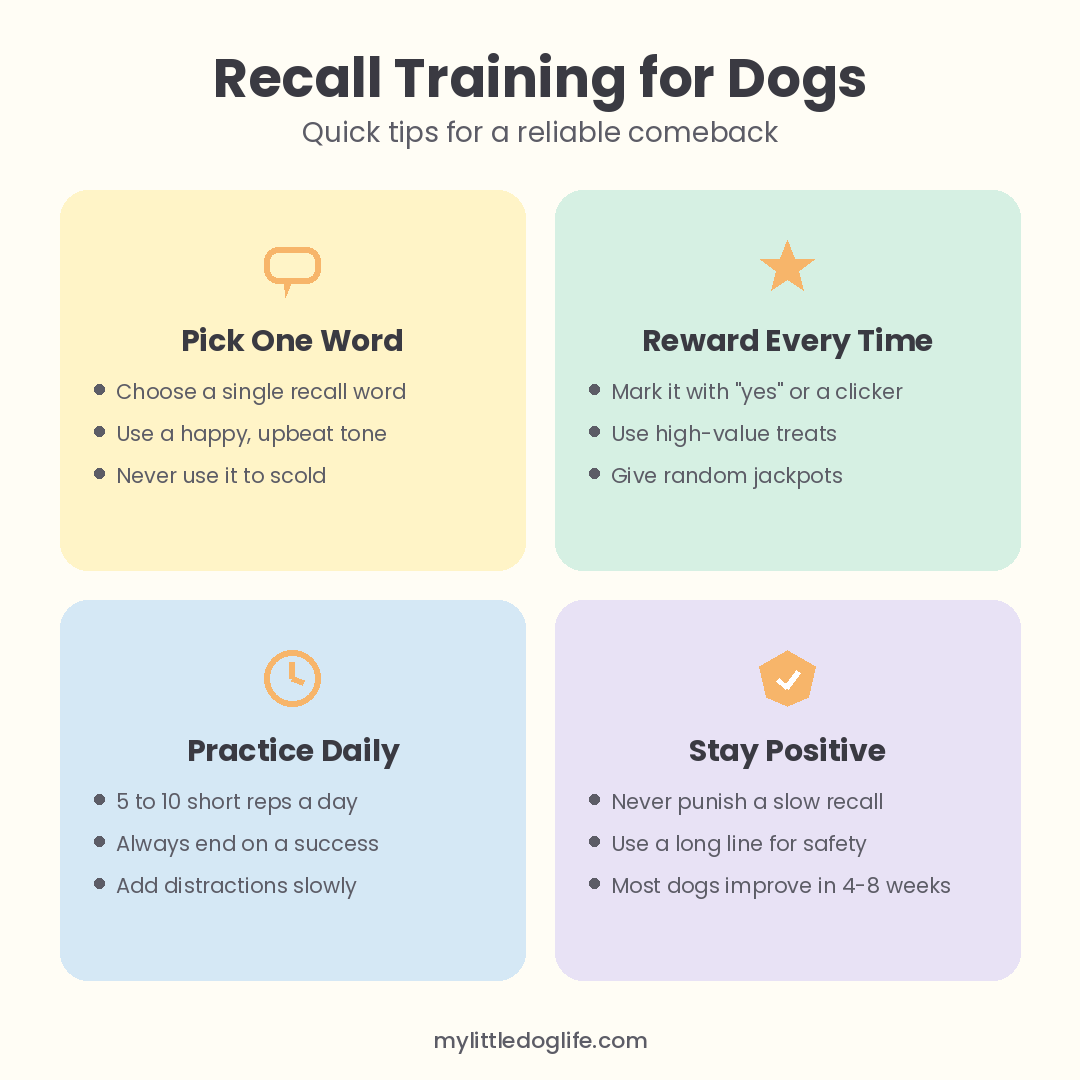
Choose One Recall Word
Pick a single word like “come” or “here” and stick with it. Using different words confuses your dog and slows down learning.
First, say the word only in a calm, upbeat tone. Never use it as a warning or scold your dog when they finally arrive, even if the wait felt long.
Start Indoors, Away From Distractions
Begin training in a quiet room with no other pets or noise. This way, your dog can focus fully on learning the pattern.
Then, once they respond well indoors, move to a fenced yard. After that, you can try a quiet park using a long training leash for safety.
Tip: Keep early training sessions short, around five minutes, so your dog stays excited instead of bored.
Step-by-Step Recall Training for Dogs
Consistency matters more than intensity here. So, work through these steps slowly and repeat each one until your dog is confident.
- Say your dog’s name, then your recall word, in a happy voice.
- The moment they start moving toward you, mark the behavior with a clicker or the word “yes.”
- Reward with a high-value treat and gentle praise the second they reach you.
- Practice five to ten short reps daily, always ending on a success.
- Gradually add distance, then mild distractions, then real-world settings.
- Use a long line outdoors until the recall is rock solid off-leash.
In fact, many trainers recommend rewarding every single recall during the learning phase. That’s a practice also echoed by the American Kennel Club. However, skipping rewards too early is one of the fastest ways to weaken this skill.
Practicing Recall Around Real Distractions
Once the basics are solid, it’s time to test recall around real-life temptations. This step is where many owners give up too soon.
Generally speaking, you should raise difficulty in tiny steps. For instance, practice near a calm dog before trying it near a squirrel or another excited pup.
Meanwhile, keep a long training leash attached during this phase. It gives you a safety net without punishing your dog for a slow response.
If your dog struggles with reactivity around other dogs, a strong recall can genuinely help. It pairs well with the techniques in our guide on leash reactivity in dogs. Both skills rely on the same foundation of calm, positive reinforcement.
Even so, some dogs need extra time before they’re ready for off-leash freedom. There’s no shame in keeping a long line on for months while confidence builds. After all, safety always matters more than speed.
Recall Training for Puppies
Puppies are actually easier to train than adult dogs in many ways. That’s because they naturally want to stay close to you. So, start recall the day you bring your puppy home.
Because puppies also go through a mouthy, distracted phase, pairing recall work with structure helps a lot. For example, our post on stopping puppy biting covers gentle ways to manage that overlapping stage.
Crate training also supports recall indirectly, since it builds the same calm, cooperative mindset. If you’re just getting started, our crate training guide walks through the basics step by step.
To begin with, keep puppy sessions even shorter than adult sessions, closer to two or three minutes. Their attention span simply can’t handle more yet. But don’t worry, short sessions still add up fast.
Common Mistakes
- Calling your dog only to end a fun activity, like leaving the dog park.
- Punishing your dog after a slow or delayed recall.
- Practicing only in low-distraction places, then expecting perfect results outdoors.
- Using a flat, boring tone instead of an upbeat, exciting one.
- Removing the long line too early, before the behavior is fully reliable.
- Repeating the recall word over and over when the dog doesn’t respond right away.
Expert Tips
- Keep a stash of extra-special treats reserved only for recall practice.
- Randomly reward with jackpots, several treats at once, to keep the behavior strong.
- Practice recall during walks too, not just structured training sessions.
- Always make coming to you the best part of your dog’s day.
- Ask family members to use the same word and tone for consistency.
Frequently Asked Questions
How long does recall training take?
It varies by dog, but most owners see real progress within four to eight weeks of daily practice. However, a truly reliable off-leash recall can take several months to build fully.
What if my dog only listens when I have treats?
This is common early on, so don’t worry. Gradually fade the treats by rewarding every other time, then randomly, while keeping praise consistent throughout. Even so, keep some treats on hand for tricky situations.
Should I ever use punishment for a slow recall?
No. Punishing a late recall teaches your dog that coming to you is risky, which backfires badly. In other words, punishment undoes the trust you’re trying to build. Positive reinforcement is the only approach recommended by modern trainers and behaviorists.
Is it too late to train recall in an older dog?
Not at all. Senior and adult dogs can absolutely learn recall. Even so, it may take a little more patience than with a puppy.
Summary
Recall training for dogs takes patience, but the payoff is huge. You’ll end up with a dog who comes back every time, no matter the distraction. So, start small, reward generously, and raise the difficulty slowly.
Ultimately, consistency beats intensity. A few short sessions each day will get you further than one long, frustrating one.
Because every dog learns at their own pace, try not to compare your progress to anyone else’s. Your dog will get there. And when they do, that recall will feel like second nature to both of you.
References
PawLife is written and edited by a dog owner who researches every topic using veterinary and canine-behavior sources (AKC, AVMA, ASPCA) before publishing. We are not veterinarians — this article is for general information only and is not a substitute for professional veterinary advice. Always consult your vet about your dog's specific health or behavior needs. Learn more about us.
Pingback: Crate Training for Puppies: The Complete Guide - PawLife