The signs your dog is overweight are usually easier to spot than you’d think, once you know where to look. Extra pounds creep on slowly. So, a lot of owners miss it until a vet points it out at a checkup. The good news? Catching it early is simple once you know what to check.
What “Overweight” Actually Means for a Dog
Vets don’t just eyeball a dog and guess. Instead, they use something called a body condition score. It runs from too thin to obese on a simple scale. In fact, it’s the same test used at nearly every checkup.
Here’s how it works. First, run your hands along your dog’s sides. Then, check whether you feel the ribs easily, without pressing hard. You shouldn’t need to dig through a thick layer of fat to find them.
Next, look at your dog from above. There should be a visible waist tucking in behind the ribs, almost like an hourglass shape. From the side, the belly should tuck up, and it shouldn’t hang level with the chest.
If you can’t feel the ribs at all, that’s a strong clue. Same goes for a waist that’s disappeared entirely. In other words, the shape test tells you more than a bathroom scale ever could. After all, a healthy weight looks different on every breed and body type.
A number on a scale means very little without context. For example, a 70-pound Labrador might be lean, while a 70-pound dog of a smaller breed could be dangerously overweight.
Signs Your Dog Is Overweight
So what does this look like day to day? A few patterns tend to show up together. That said, they’re worth watching for as a group, not one at a time.
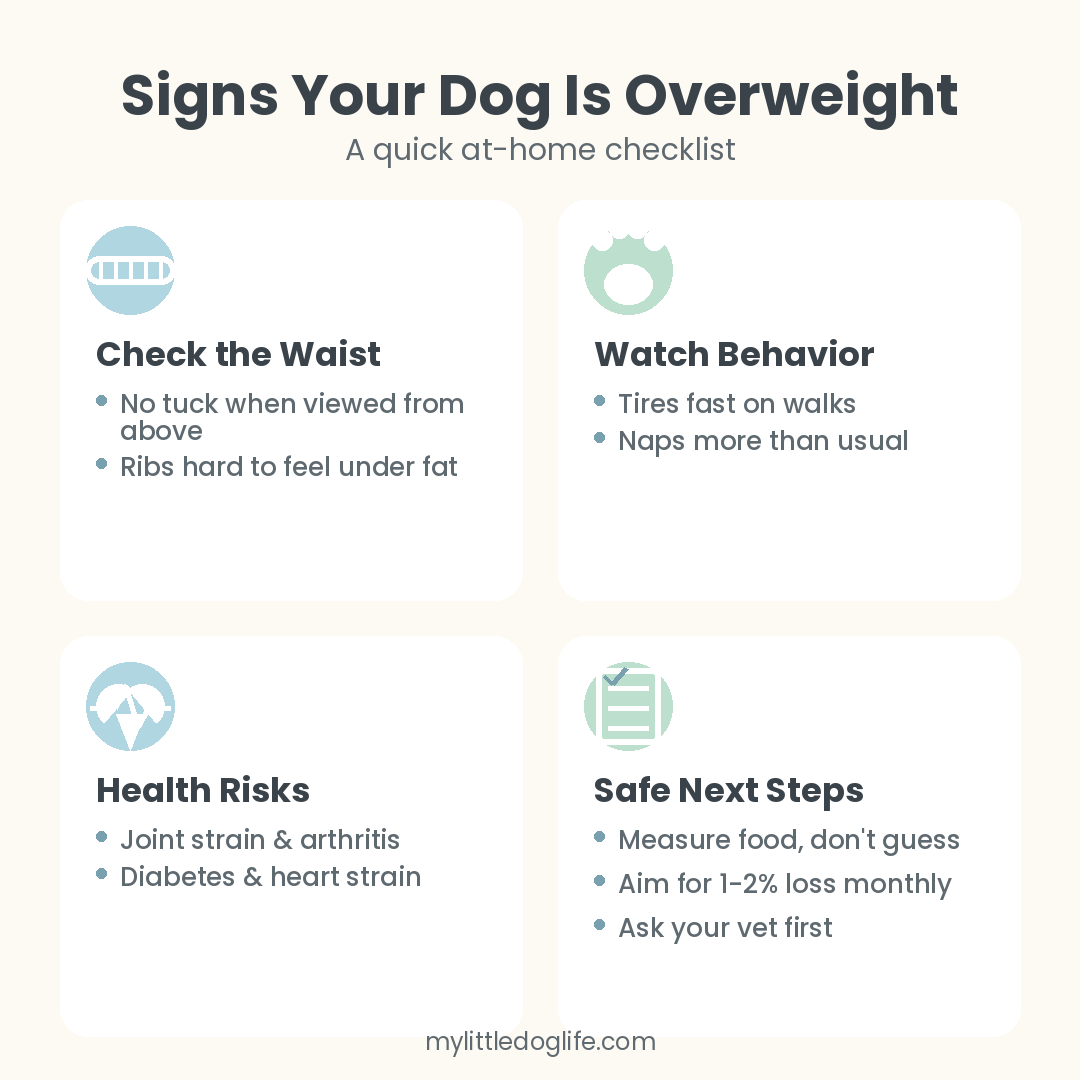
- No visible waist when viewed from above or the side
- Ribs are hard to feel under a layer of fat
- Getting tired or breathing heavily on walks that used to be easy
- Slowing down, napping more, or skipping jumps onto furniture
- A rounded, sagging belly instead of a tucked-up one
- Visible fat near the base of the tail or around the neck
- Trouble finding a comfortable position to lie down
Generally speaking, one or two of these on their own isn’t a huge red flag. But, when three or more show up together, it’s time for a closer look. Because these signs build slowly, a monthly hands-on check catches changes early.
Photos can help too. For instance, snap a quick side and overhead photo each month, then compare them side by side. Small shifts are much easier to see in pictures than in person, since you see your dog every day.
Why Extra Weight Is a Bigger Deal Than It Looks
Even a few extra pounds put real strain on a dog’s body. On top of that, the effect is bigger than it sounds, since dogs are so much smaller than we are. A small gain for us can be a huge percentage of a dog’s total body weight.
Extra weight adds pressure to joints. As a result, it can bring on or worsen joint problems like arthritis, especially as dogs get older. An overweight dog also tends to slow down more, which then makes losing weight even harder over time.
Extra weight raises the risk of diabetes, heart strain, and breathing trouble too. On top of that, overweight dogs are far more vulnerable to heatstroke in hot weather. Extra fat simply makes it harder for a dog’s body to cool itself down.
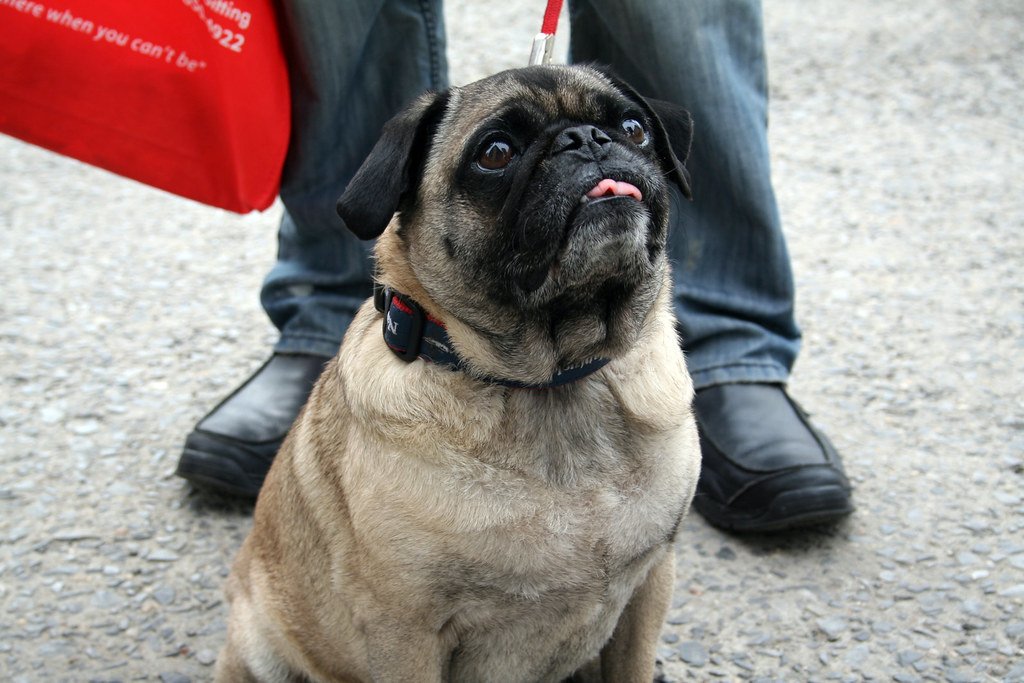
Some dogs face higher stakes than others. Generally speaking, senior dogs carry extra weight worse since their joints are already under strain. Likewise, certain breeds, like Labradors, Beagles, and Pugs, gain weight more easily than leaner breeds.
Research has also linked excess weight to a shorter lifespan overall. Even so, none of this is meant to scare you. It’s meant to explain why catching it early actually matters.
How to Help Your Dog Get to a Healthy Weight
First, talk to your vet before changing anything. That way, a vet can rule out medical causes. Then, together, you can set a realistic target weight.
Next, measure food with an actual measuring cup instead of eyeballing it. It’s a small habit, but it makes a big difference over weeks and months. Even a slightly overfilled cup adds up fast.
Treats count too, so keep them to a small share of daily calories. Even so, cutting treats out completely usually backfires. Dogs, and owners, need that reward loop to stay consistent.
Exercise matters just as much as food. Meanwhile, a dog that pulls hard on the leash can turn walks into a chore instead of a treat. Fixing that first, using tips like our guide to leash pulling, makes daily walks something you’ll both enjoy.
Hydration plays a role too, since dogs sometimes mistake thirst for hunger and beg for food when water would do. If you’re unsure how much water your dog should drink each day, it’s worth checking alongside portion sizes. Spayed and neutered dogs also tend to need fewer calories, so it’s worth rechecking portions a few months after surgery.
Tip: Weigh your dog, or ask your vet’s office to do a quick weigh-in, every two to four weeks during a weight-loss plan. Small, steady drops are safer than fast ones.
Common Mistakes
- Guessing portions by eye instead of measuring food each time
- Free-feeding all day instead of set mealtimes
- Cutting calories fast without vet guidance, which can cause other problems
- Forgetting that treats, table scraps, and dental chews all add up
- Comparing your dog’s weight to a breed “standard” instead of their own body shape
Expert Tips
- Do a hands-on rib check monthly, not just a visual glance
- Swap one high-calorie treat a day for a piece of plain carrot or green bean
- Split meals into two smaller portions instead of one big one
- Track weight loss in small increments, since slow and steady is safest
- Ask your vet about a weight-management food if progress stalls
Frequently Asked Questions
How much weight loss is safe for a dog each month?
Generally speaking, a safe pace is around 1-2% of body weight per month. That said, your vet can set an exact target based on your dog’s size, age, and health.
Can puppies be overweight too?
Yes, puppies can carry extra weight, though it’s less common. Even so, rapid growth needs the right nutrition. Because of this, puppy weight concerns should go through your vet, not a home diet plan.
Is it okay to just feed less of the same food?
It can work for mild cases, but it’s not always enough on its own. Commercial diets are balanced for a certain calorie range. So, cutting portions too far can leave gaps in nutrients. That’s why a vet-approved weight food is often a better fix.
Will exercise alone fix an overweight dog?
Exercise helps, but it rarely works alone. In fact, most successful weight-loss plans pair portion control with activity. That’s because diet has a bigger impact than exercise on its own.
Summary
Watching for the signs your dog is overweight doesn’t take special equipment. It just takes a monthly hands-on check and a bit of attention. Ribs you can feel, a visible waist, and steady energy on walks are all good signs. If those start slipping, a quick vet visit and a few portion adjustments usually turn things around. Ultimately, a healthy weight means a longer life for your dog, and that’s worth the small effort it takes.
References
PawLife is written and edited by a dog owner who researches every topic using veterinary and canine-behavior sources (AKC, AVMA, ASPCA) before publishing. We are not veterinarians — this article is for general information only and is not a substitute for professional veterinary advice. Always consult your vet about your dog's specific health or behavior needs. Learn more about us.