Dog dental care at home is one of the easiest ways to add healthy years to your dog’s life. Most owners have no idea how simple it really is. Bad breath isn’t just gross, either. In fact, it’s often the very first sign of trouble building up under the gumline. Here’s the thing: a few minutes a day can spare your dog a painful, expensive dental problem later.

Why Dental Care Matters So Much
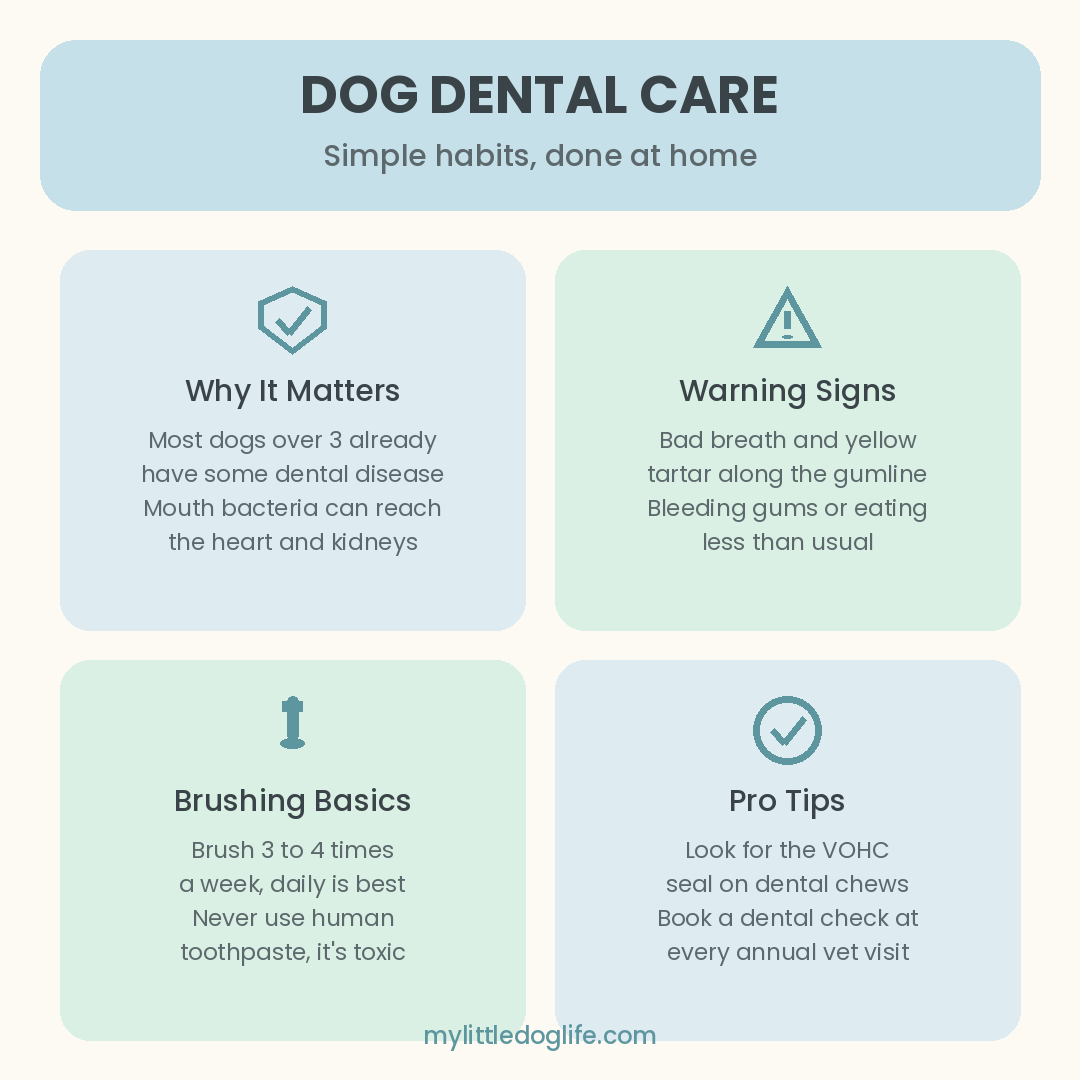
Most dogs over age three already have some form of dental disease. In other words, that’s a huge number. It sneaks up on owners because dogs hide pain so well.
Because of this, plaque quietly turns into tartar within days. Left alone, it works under the gum. From there, it can attack the bone that holds each tooth in place.
In fact, untreated dental disease has even been linked to heart and kidney problems. That’s because mouth bacteria can travel through the bloodstream. So, this isn’t just about fresh breath. It’s about protecting your dog’s whole body.
There’s a cost side to this, too. Advanced dental disease often means tooth extractions later, plus anesthesia, plus a bigger vet bill. On top of that, older dogs carry more anesthesia risk. Catching problems early is safer for senior pets, too.
Signs Your Dog’s Teeth Need Attention
First, you don’t need special training to spot early trouble. Generally speaking, your nose and eyes are your best tools here.
- Breath that smells noticeably foul, not just typical “dog breath.”
- Yellow or brown crust building up along the gumline.
- Red, swollen, or bleeding gums.
- Dropping food, chewing on one side, or pawing at the mouth.
- Excessive drooling or a sudden drop in appetite.
That last sign matters more than most people realize. A dog in dental pain may eat or drink less. As a result, that drop can quietly affect their whole system. For instance, a sudden dip in how much water your dog drinks daily is worth checking against their mouth.
On top of that, weight changes often follow, too. If chewing hurts, your dog may eat less overall. Because of this, watch for signs your dog is losing or gaining weight unexpectedly, since both can signal trouble.
Dog Dental Care at Home: How to Brush
Brushing is still the single best thing you can do. It sounds intimidating at first. Even so, most dogs learn to accept it within a couple of weeks.
Getting Started
First, pick up a toothbrush made for dogs, or a soft finger brush instead. Never use human toothpaste, though. It often contains xylitol, and that’s toxic to dogs.
Small dogs and puppies often do better with a finger brush at first. It feels less strange in a small mouth. Larger dogs, meanwhile, usually tolerate a long-handled brush just fine once they’re used to it.
Then, let your dog lick a bit of dog-safe toothpaste off your finger. So, this builds a positive feeling before any real brushing starts.
The Actual Brushing
Next, lift the lip gently. Brush in small circles along the outer teeth. You don’t need to force the mouth open, since most plaque builds up on the outside surfaces anyway.
After that, aim for a slow buildup. Try just a few seconds on day one, then add more time each session. Even so, three or four sessions a week beats a perfect routine you quit after one try.
Tip: Keep sessions short, and end with praise or a treat every time. That’s what turns brushing into a habit instead of a battle.
Other At-Home Dental Care Options
Brushing isn’t the only tool in the box. That said, these options work best as add-ons, not replacements.
- Dental chews approved by the Veterinary Oral Health Council.
- Water additives designed to reduce plaque buildup.
- Dental-formula kibble with a texture that scrapes teeth while chewing.
- Raw carrots or dental toys for supervised chew time.
However, none of these clean below the gumline the way brushing can. In other words, treat them as backup support, not a substitute.
Before buying any product, look for the Veterinary Oral Health Council seal on the package. That seal means the product passed real testing for plaque or tartar control. Many chews on store shelves just claim it on the label.
When to See the Vet
Even with great home care, dogs still need professional cleanings sometimes. Ultimately, only a vet can see and treat what’s happening below the gumline.
Just like a puppy vaccination schedule keeps your dog protected, dental checkups deserve that same regular attention. So, ask about it at every annual visit.
Meanwhile, some signs mean don’t wait at all. Facial swelling, a broken tooth, or a sudden refusal to eat all count as emergencies. Please contact your veterinarian right away, since mouth infections can spread fast.
Common Mistakes
- Using human toothpaste, which can be toxic to dogs.
- Giving up on brushing after just one bad try.
- Assuming fresh-smelling breath means there’s no problem.
- Relying only on chews instead of real brushing.
- Waiting until a dog stops eating before calling the vet.
Expert Tips
- Start dental care early, ideally while your dog is still a puppy.
- Brush around the same time each day so it becomes routine.
- Book a dental check at every annual wellness visit.
- Choose chews with the Veterinary Oral Health Council seal.
- Also watch your dog’s skin and coat. Health issues often show up together, as covered in this guide to hot spots on dogs.
Frequently Asked Questions
How often should I brush my dog’s teeth?
Daily brushing is ideal. That said, three to four times a week still helps a lot. As a result, consistency matters more than perfection here.
Can I use baking soda instead of dog toothpaste?
No, that’s not a safe swap. Baking soda can upset a dog’s stomach. So, stick with toothpaste made just for dogs.
Is bad breath in dogs always a dental problem?
Usually, yes, it points to plaque or gum trouble. However, sudden or unusual odors can sometimes signal other issues. Because of this, mention it to your vet if it seems severe.
At what age should dental care start?
As early as possible, ideally in puppyhood. In fact, getting puppies used to having their mouths touched makes adult brushing much easier later.
Summary
Dog dental care at home doesn’t need to be complicated. Generally speaking, a soft brush, dog-safe toothpaste, and a few steady minutes a day go a long way. Even so, home care works alongside vet visits, not instead of them. Ultimately, catching problems early keeps your dog comfortable, and it saves you money and worry down the road.
References
PawLife is written and edited by a dog owner who researches every topic using veterinary and canine-behavior sources (AKC, AVMA, ASPCA) before publishing. We are not veterinarians — this article is for general information only and is not a substitute for professional veterinary advice. Always consult your vet about your dog's specific health or behavior needs. Learn more about us.