Signs of arthritis in senior dogs often start small. Maybe it’s stiffness after a nap, or a little hesitation before jumping onto the couch. That’s easy to miss, since dogs are so good at hiding pain. But once you know what to look for, you can catch changes early. That means real relief for your dog.
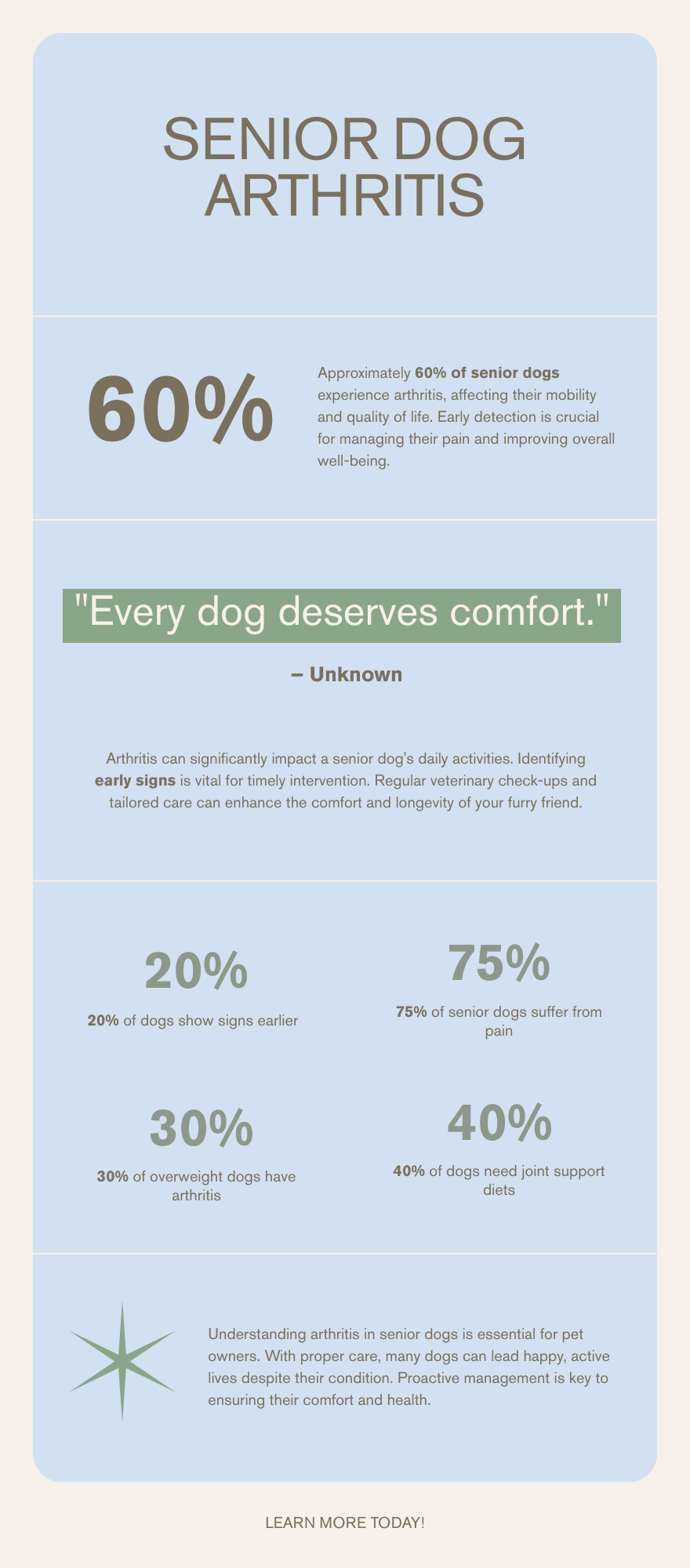
Here’s the thing: arthritis is one of the most common health problems in older dogs. In fact, it affects a huge share of dogs over age seven. The good news? Simple changes at home can help a lot. Combined with your vet’s guidance, your senior dog can keep moving comfortably for years.

What Is Canine Arthritis, Really?
Arthritis is inflammation inside a joint, usually caused by worn-down cartilage. Over time, bones rub together instead of gliding smoothly. As a result, this causes pain, swelling, and stiffness that gets worse without treatment.
Most dogs develop arthritis in their hips, knees, elbows, or spine. Generally speaking, large breeds tend to show symptoms earlier, often by age six or seven. Smaller dogs usually develop it later. Even so, it still catches up with nearly every senior dog eventually.
Common Signs of Arthritis in Senior Dogs
So, what should you actually watch for? Dogs can’t tell you their joints hurt, so their behavior has to speak for them.
Physical Changes
- Stiffness after resting, especially first thing in the morning
- Limping or favoring one leg
- Reluctance to jump onto furniture or into the car
- Trouble climbing stairs
- Muscle loss in the back legs
- Licking or chewing at sore joints
Behavior Changes
Pain doesn’t just show up in the body. In fact, it often changes how a dog acts, too.
- Slower walks or shorter playtime
- Irritability when touched near sore spots
- Sleeping more than usual
- Hesitating before sitting or standing up
If you notice several of these signs together, it’s worth a vet visit. As a result, you’ll get a clear answer instead of guessing.
| Normal Aging | Possible Arthritis |
|---|---|
| Slightly slower on walks | Limping or favoring a leg |
| Sleeps a bit more | Struggles to stand after resting |
| Slower to respond to cues | Yelps or flinches when touched |
| Grayer fur, calmer mood | Avoids stairs or jumping entirely |
How Vets Diagnose Arthritis in Dogs
Your vet can’t ask your dog where it hurts. Instead, they rely on a hands-on exam. This usually means watching your dog walk. Vets also gently check each joint for pain or swelling.
X-rays are often the next step. They show joint damage that isn’t visible from the outside. In some cases, your vet may also run bloodwork. This rules out other conditions with similar symptoms.
Why Weight and Joints Go Hand in Hand
Extra weight puts extra pressure on every joint your dog owns. Because of this, overweight senior dogs tend to develop arthritis symptoms faster. Keeping your dog at a healthy weight helps a lot. It’s one of the simplest ways to protect their joints. Not sure where your dog stands? For example, this guide on telling if your dog is overweight walks through the basics.
Even a few extra pounds matter more than most owners realize. On top of that, weight loss in an arthritic dog can be tricky. Exercise is simply harder when joints hurt. That’s why catching things early makes such a big difference.
Nutrition and Joint Support
Diet plays a bigger role in joint health than many owners expect. For instance, omega-3 fatty acids, found in fish oil, can help reduce joint inflammation. Meanwhile, glucosamine and chondroitin supplements are popular. That said, the science on how much they help is still mixed.
First, talk to your vet before starting any supplement. Some senior dogs also do well on prescription joint-support diets made for aging joints. Either way, always check with your vet before changing your dog’s diet. This matters even more if your dog has other health conditions.
Keeping Senior Dogs Comfortable at Home
Small changes around the house can make a real difference for an arthritic dog. For instance, orthopedic dog beds cushion sore joints well. That beats a thin cushion on the floor.
- Add ramps or steps near the bed, couch, or car
- Use rugs or mats on slippery floors for better grip
- Keep food and water bowls raised to reduce neck strain
- Offer short, gentle walks instead of one long outing
- Keep nails trimmed, since long nails change how a dog stands
Regular checkups matter too. Senior dogs often deal with more than one health issue at once. For example, dental disease can go unnoticed if arthritis is the main focus. Because of this, a full senior wellness exam is worth it. Aim for once or twice a year.
Common Mistakes
- Assuming slowing down is “just old age” instead of a treatable problem
- Giving human pain medication, which can be toxic to dogs
- Skipping vet visits because symptoms come and go
- Letting a dog stay overweight because exercise feels too hard
- Starting supplements without checking the dose with a vet
Expert Tips
- Track your dog’s mobility with short weekly notes or photos, so gradual changes are easier to spot
- Ask your vet about a joint-focused exam at every senior wellness visit
- Keep exercise consistent but gentle, rather than occasional bursts of activity
- Warm, dry bedding can ease stiffness on cold mornings
Frequently Asked Questions
At what age do dogs typically develop arthritis?
Generally speaking, large breeds show signs by age six or seven. Smaller dogs usually develop symptoms later. That said, genetics, weight, and past injuries all play a role. So, every dog’s timeline looks different.
Can arthritis in dogs be cured?
No, arthritis can’t be cured, but it can be managed well. However, with the right mix of care, many dogs stay comfortable. Weight control, exercise, and vet-guided treatment all help long term.
Is it normal for a senior dog to limp sometimes?
Occasional limping isn’t automatically an emergency, but it shouldn’t be ignored either. If limping continues for more than a day or two, contact your vet. The same goes if it seems painful.
What should I do if my dog suddenly can’t stand up?
This is different from normal stiffness and needs quick attention. So, contact your vet or an emergency animal hospital right away. Sudden loss of mobility can signal a serious problem.
Summary
Spotting the signs of arthritis in senior dogs early gives you a real head start. Watch for stiffness, limping, and behavior changes. Then, loop in your vet as soon as something feels off. Ultimately, healthy weight and smart nutrition both help enormously. Add a comfortable home setup, too. Your senior dog can keep moving happily for years to come.
References
PawLife is written and edited by a dog owner who researches every topic using veterinary and canine-behavior sources (AKC, AVMA, ASPCA) before publishing. We are not veterinarians — this article is for general information only and is not a substitute for professional veterinary advice. Always consult your vet about your dog's specific health or behavior needs. Learn more about us.
Pingback: 7 Signs Your Dog Is Overweight to Watch For - PawLife