The signs of joint pain in senior dogs often start small, like a slower walk up the stairs. Because these changes creep in slowly, it’s easy to miss them. That said, catching them early makes a real difference.
In this post, we’ll cover what joint pain looks like day to day. We’ll also look at why it happens and how you can help. None of this replaces a vet visit. So, we’ll flag when it’s time to make that call.
Common Signs of Joint Pain in Senior Dogs
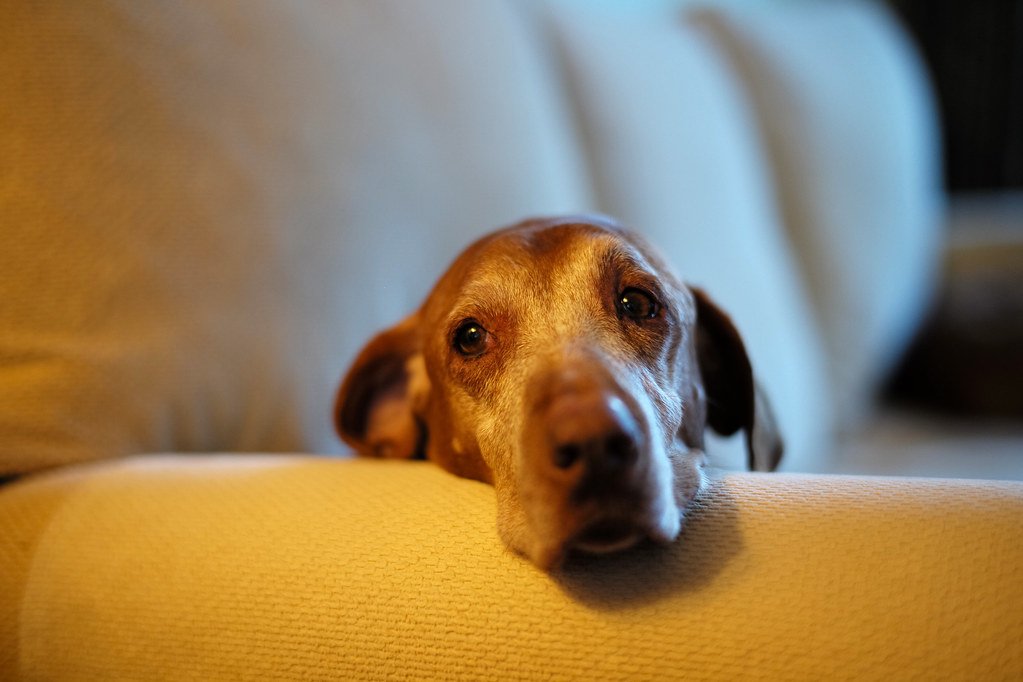
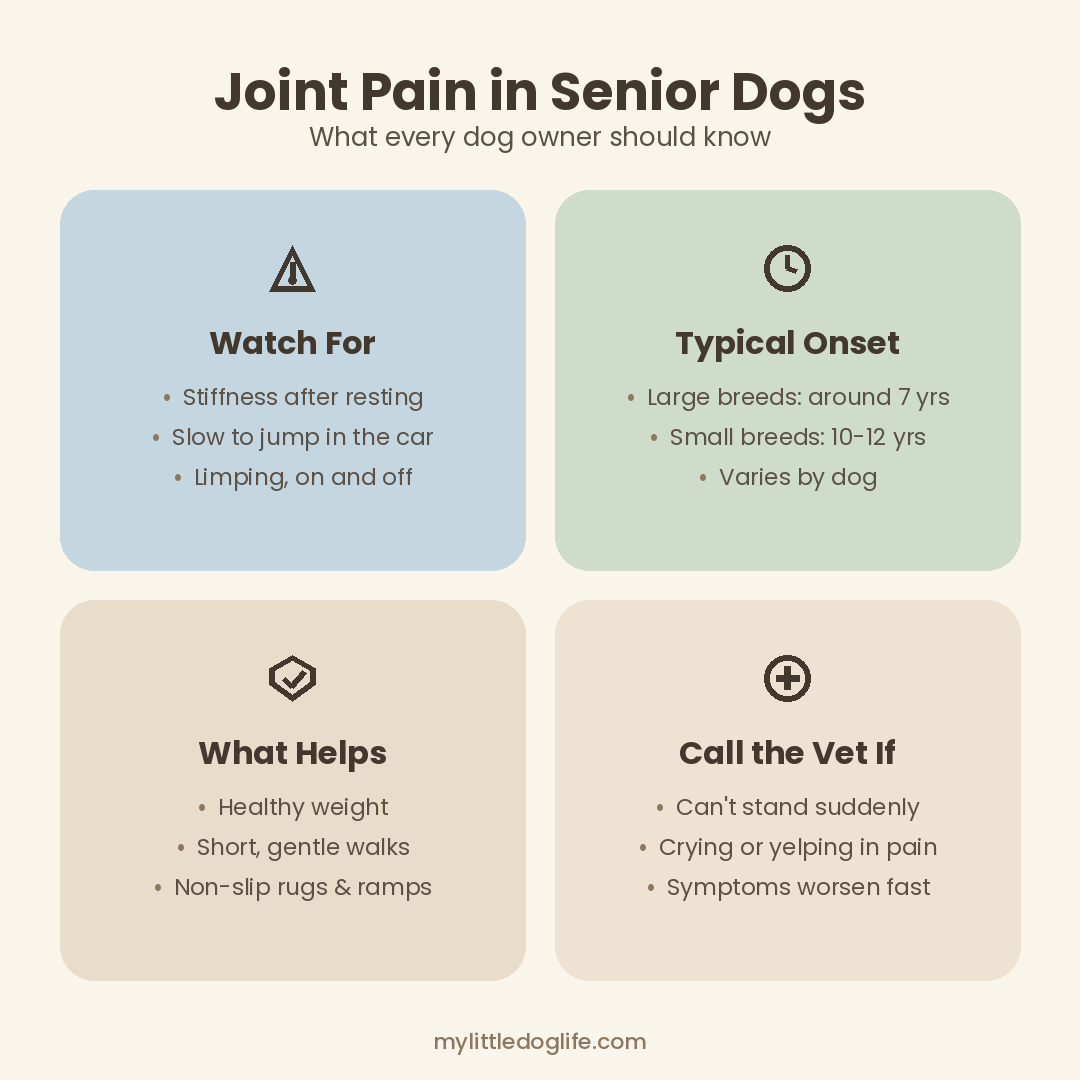
The signs of joint pain in senior dogs rarely start with obvious limping. For instance, your dog might take longer to stand up after a nap. Or they might seem stiff for the first few steps of a walk.
Watch how your dog handles stairs, curbs, or the car. A dog that used to jump into the back seat may now pause or need a boost. That hesitation is often the first real clue.
Behavior changes matter too. As a result, a dog in pain might get grumpier or avoid being touched in certain spots. Because dogs hide pain by instinct, these quiet signals are sometimes all you’ll get.
Physical Signs to Notice
- Stiffness after resting, especially first thing in the morning
- Limping or favoring one leg, even if it comes and goes
- Muscle loss in the back legs or a wobbly rear end
- Licking or chewing at a specific joint
- Clicking or grinding sounds when moving
Why Joint Pain Happens as Dogs Age
Osteoarthritis is the most common cause of joint pain in older dogs. In other words, the cartilage that cushions the joints wears down over time. It’s a normal part of aging, but your dog doesn’t have to just live with it.
Large and giant breeds tend to develop joint issues earlier, sometimes by age seven. Meanwhile, smaller breeds may not show real trouble until age ten or later. Genetics, old injuries, and extra weight all play a part too.
Extra body weight puts constant strain on joints that are already worn. If you’re not sure about your dog’s weight, our guide can help. Our guide on how to tell if your dog is overweight covers the simple checks. It only takes a few minutes at home.
Typical Onset by Size
Onset age varies quite a bit across breeds. Here’s a rough guide to when joint pain tends to start:
| Dog Size | Typical Age Joint Pain Begins |
|---|---|
| Large or giant breeds | Around 7 years old |
| Medium breeds | Around 8 to 9 years old |
| Small breeds | Around 10 to 12 years old |
These are general ranges, not hard rules. Every dog ages a little differently, so use this as a starting point rather than a strict timeline.
Simple Checklist: Is Your Senior Dog in Pain?
Not sure if what you’re seeing is normal aging? Run through this quick checklist below. If you check three or more, a vet visit is a good idea.
- Slower to rise from lying down
- Reluctant to jump on furniture or into the car
- Shorter walks or less interest in play
- Limping, even if it’s mild or occasional
- Changes in posture, like a hunched back
- Irritability when touched near the hips or legs
- Restlessness or panting at night
Tip: Film a short video of your dog walking and getting up. It’s easier to spot slow changes on video than to recall what “normal” looked like months ago.
How to Help a Senior Dog with Joint Pain
First, get a proper diagnosis from your vet. Joint pain can look like other conditions. So, an exam and maybe X-rays give you a real answer instead of a guess.
Weight management is often the biggest thing you can control. Even a few extra pounds adds real pressure to hips and knees. As a result, many vets treat weight loss as step one for arthritic dogs.
Staying hydrated also supports joint and organ health, especially since older dogs tend to drink less. Take a look at our guide on how much water a dog should drink. It’ll help you check your senior is getting enough.
Everyday Comfort Changes
Small home changes add up fast. On top of that, they’re cheap and easy to make this weekend. Here are a few low-cost, high-impact ideas:
- Add non-slip rugs or runners on hardwood or tile floors
- Use a ramp or steps for the car and furniture
- Switch to a supportive orthopedic bed
- Keep nails trimmed short to help traction and balance
- Stick to short, gentle walks instead of one long one
Common Mistakes
- Assuming slowing down is “just old age” and skipping the vet
- Giving human pain medication, which can be dangerous for dogs
- Letting a senior dog stay overweight because “they don’t move much anyway”
- Stopping exercise completely instead of switching to gentler activity
- Waiting for obvious limping before taking any action
Expert Tips
- Ask your vet for a joint-focused exam at every senior checkup
- Keep a simple pain journal to track small changes over time
- Ask about vet-approved joint supplements instead of picking one off a shelf
- Warm up short walks with a slow first few minutes
- Book vet checkups more often once your dog reaches senior age
Frequently Asked Questions
At what age do dogs typically start showing joint pain?
It varies by breed and size. Generally speaking, large breeds show signs by age seven. Smaller dogs, on the other hand, may not show issues until age ten or later. Past injuries and extra weight can push that timeline earlier too.
Can joint pain in senior dogs be reversed?
Osteoarthritis itself can’t be reversed. Even so, its effects can be managed well. With weight control and a vet-guided plan, many dogs move more comfortably for years. In fact, some owners notice real improvement within just a few weeks of starting a plan.
Is it safe to keep walking a dog with joint pain?
Generally speaking, yes. Gentle, steady movement helps keep joints from stiffening further. That said, walks should be shorter and slower, not longer. Always check with your vet first if your dog seems uncomfortable.
What should I do if my senior dog suddenly can’t get up?
Treat this as an emergency. A sudden inability to stand can point to a serious injury, not just arthritis. Because of this, contact your vet or an emergency clinic right away.
Summary
The signs of joint pain in senior dogs are usually quiet at first. A little stiffness, a pause before jumping, a change in mood. Catching those signals early, and looping in your vet, gives your dog a real shot at staying comfortable. Ultimately, small home changes plus the right care can add good years to your dog’s life.
References
PawLife is written and edited by a dog owner who researches every topic using veterinary and canine-behavior sources (AKC, AVMA, ASPCA) before publishing. We are not veterinarians — this article is for general information only and is not a substitute for professional veterinary advice. Always consult your vet about your dog's specific health or behavior needs. Learn more about us.