“Why does my dog bark so much?” is one of the most common questions new dog owners ask. Honestly, it’s a fair one to ask. A little barking is totally normal dog communication, and every dog does it sometimes. But when it turns into constant noise, it wears on your nerves and your neighbors’ patience alike.

Why Does My Dog Bark So Much? Common Triggers Explained
Dogs bark for real reasons, even when it doesn’t seem like it. In fact, barking is simply how dogs communicate, whether they’re excited, scared, bored, or trying to warn you. Figuring out the trigger is the first step toward fixing it.
Some dogs bark at every sound outside. Others bark mostly when left alone or ignored for too long. So, the fix looks different depending on which type of barking you’re actually dealing with.
If your dog barks mainly when you leave the house, that often points to separation anxiety rather than simple noise-seeking. That’s an important distinction, since anxiety-driven barking needs a gentler, more gradual approach than boredom barking does.
Generally speaking, most dogs fall into more than one category at once. A bored dog left alone all day may bark from loneliness, then again at every passing car. Because of this, it helps to watch your dog’s patterns for a few days before picking a plan.
Alert, Territorial, and Attention-Seeking Barking
Alert barking happens when your dog notices something new, like the mail carrier or a knock at the door. This is instinctive, and a little of it is fine. Even so, it shouldn’t turn into five straight minutes of noise every time.
Territorial barking is similar but more intense, often aimed at people or dogs passing your yard. That said, dogs who bark and lunge at other dogs on walks may need extra help with reactivity. Our guide on leash reactivity covers calm, structured techniques that work well alongside barking training.
Attention-seeking barking is different still. Here’s the thing: if barking gets you to look over or hand out treats, your dog just learned something. Barking works, at least from their point of view. As a result, the behavior repeats and often gets louder over time.
To begin with, try not to respond to demand barking at all, even with eye contact. Instead, wait for a quiet pause, then reward that silence generously. Timing matters more than volume here.
Teach a Positive “Quiet” Cue
A reliable “quiet” cue is one of the most useful skills you can teach. First, let your dog bark two or three times, then say “quiet” in a calm, normal voice. The moment they pause, even briefly, mark it with praise and a treat.
Repeat this daily in short, calm sessions. Over time, your dog starts connecting the word with the reward of silence, not the other way around. However, yelling “quiet” tends to backfire, since it can sound like you’re just barking along with them.
Consistency across the household matters just as much as the technique itself. Everyone needs to use the same word and the same calm tone every time. Otherwise, mixed signals slow down progress considerably.
Tip: Practice the “quiet” cue during calm moments first, not just mid-bark. That way, your dog learns the word before it’s ever tested under real excitement.
Patience pays off here. Most dogs show real improvement within two to four weeks of steady, positive practice.
Manage the Environment and Build Better Habits
Training works best alongside a few environmental changes. Blocking your dog’s view of the street, for instance, can cut down on alert barking dramatically. Meanwhile, background noise like a fan or soft music can mask outside sounds that trigger barking.
A few habits make a real difference over time. Here’s a quick checklist worth trying:
- Block visual triggers like windows facing the street with a curtain or film
- Give daily physical exercise to burn off pent-up energy
- Offer a puzzle feeder or chew toy during high-noise times, like deliveries
- Practice calm departures and arrivals without big greetings
- Reward quiet moments generously and consistently
If your dog barks in the crate, that’s often about comfort more than defiance. Pairing a calm bedtime routine with proper crate training steps can help a lot. Ultimately, the goal is a dog who feels secure enough that barking isn’t their only outlet.
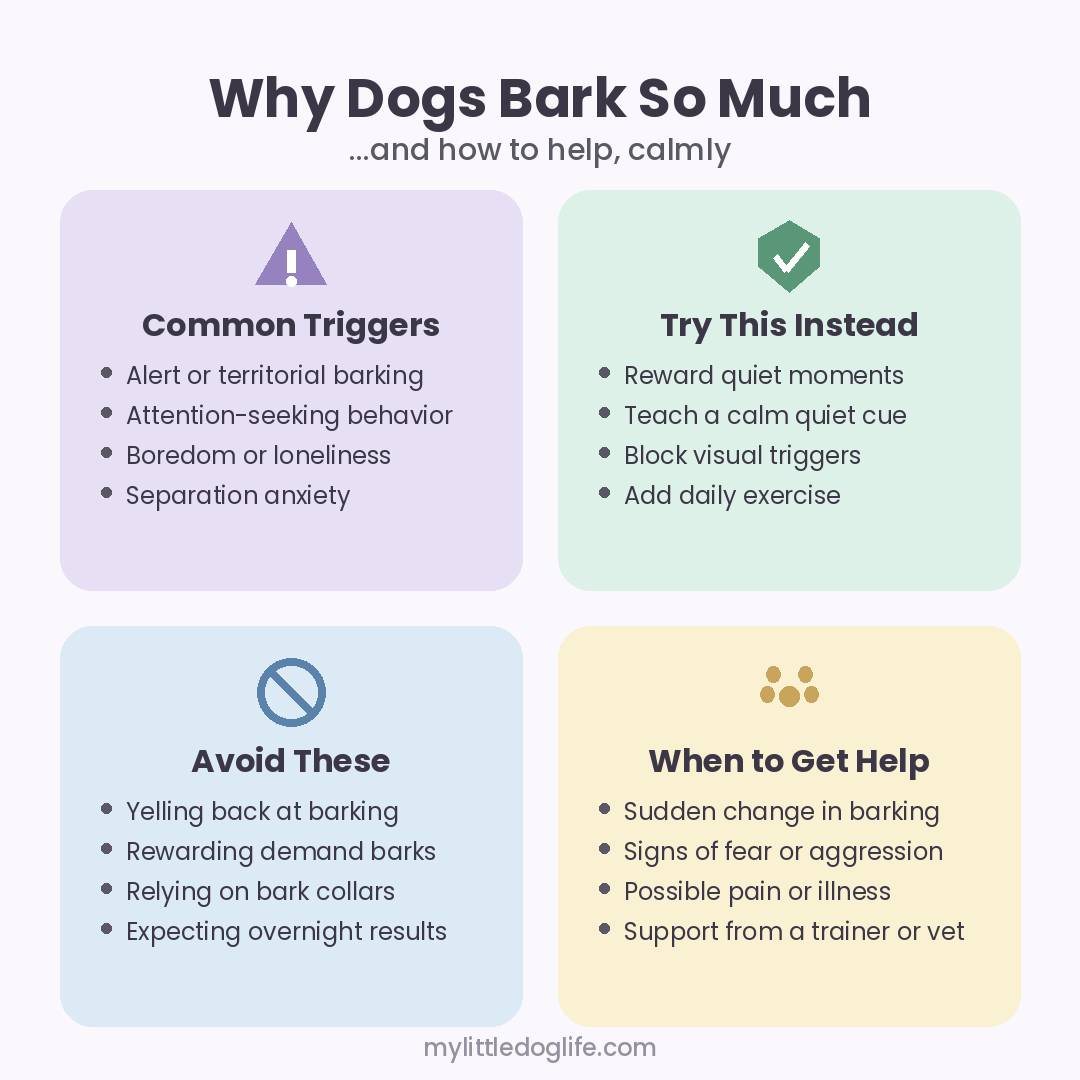
Common Mistakes
- Yelling at a barking dog, which often sounds like joining in rather than correcting it
- Giving attention, treats, or eye contact during demand barking, which rewards the behavior
- Punishing barking without addressing the root cause, like anxiety or boredom
- Using bark collars as a first response instead of positive training
- Expecting overnight results instead of a few consistent weeks of practice
Expert Tips
- Track when barking happens most to identify the real trigger before training
- Reward silence immediately, since timing teaches faster than volume of praise
- Add daily exercise and mental stimulation to lower overall barking energy
- Keep training sessions short, calm, and frequent rather than long and rare
- Loop in a certified trainer if barking comes with visible fear or aggression
Frequently Asked Questions
Why does my dog bark so much at night?
Nighttime barking often comes from noises outside, loneliness, or an uncomfortable sleep setup. That said, a sudden change in nighttime barking is worth mentioning to your vet. Discomfort or hearing changes can sometimes play a role too.
Is it normal for puppies to bark more than adult dogs?
Yes, puppies are still learning what’s actually worth barking about. Generally speaking, barking calms down with age, socialization, and consistent training. Even so, gentle guidance now prevents bigger habits later.
Can barking be a sign of pain or a medical issue?
Sometimes, yes. In fact, sudden or unusual barking paired with pacing, whining, or appetite changes should prompt a veterinary visit. Ruling out pain or cognitive changes matters, especially in senior dogs.
Should I use a bark-control device?
Positive-reinforcement training should come first, always. In other words, devices that cause discomfort can increase anxiety and sometimes worsen barking. If you’re considering any device, a certified trainer or vet can help you weigh safer, evidence-based options.
Summary
So, why does my dog bark so much? Usually it comes down to a specific, fixable trigger, whether that’s boredom, alerting, anxiety, or simply wanting attention. Consistent training, a calm “quiet” cue, and a few environmental tweaks solve most cases within weeks.
If barking feels extreme or comes with signs of distress, don’t hesitate to involve your vet or a certified trainer. Extra support early on makes the whole process easier.
References
PawLife is written and edited by a dog owner who researches every topic using veterinary and canine-behavior sources (AKC, AVMA, ASPCA) before publishing. We are not veterinarians — this article is for general information only and is not a substitute for professional veterinary advice. Always consult your vet about your dog's specific health or behavior needs. Learn more about us.