Heatstroke in dogs can turn dangerous within minutes. Summer weather makes it one of the biggest risks your dog faces all year. In fact, it’s not just about hot cars. A long midday walk or a shadeless backyard can be just as risky.
Here’s the good news: most cases are preventable once you know the signs. First, here’s what every owner should understand before temperatures climb.
What Heatstroke in Dogs Actually Looks Like
Heatstroke happens when a dog’s body heats up faster than it can cool down. Dogs don’t sweat like we do. Instead, they rely mostly on panting, and that’s a much less efficient system.
Because of this, dogs overheat faster than most owners expect. A normal temperature sits around 101 to 102.5°F. Once it climbs past 104°F, you’re in dangerous territory.
Flat-faced breeds like Bulldogs and Pugs struggle even more. Their short airways make panting less effective. Senior dogs, puppies, and overweight dogs face higher risk, too. In fact, extra weight acts like insulation, trapping heat instead of releasing it.
Tip: If your dog suddenly stops panting during intense heat, don’t relax. That can mean their body is too overwhelmed to keep cooling, not that they’ve recovered.
Early Warning Signs to Watch For
Catching heatstroke early makes a real difference. The sooner you notice trouble, the faster you can act.
Mild to Moderate Signs
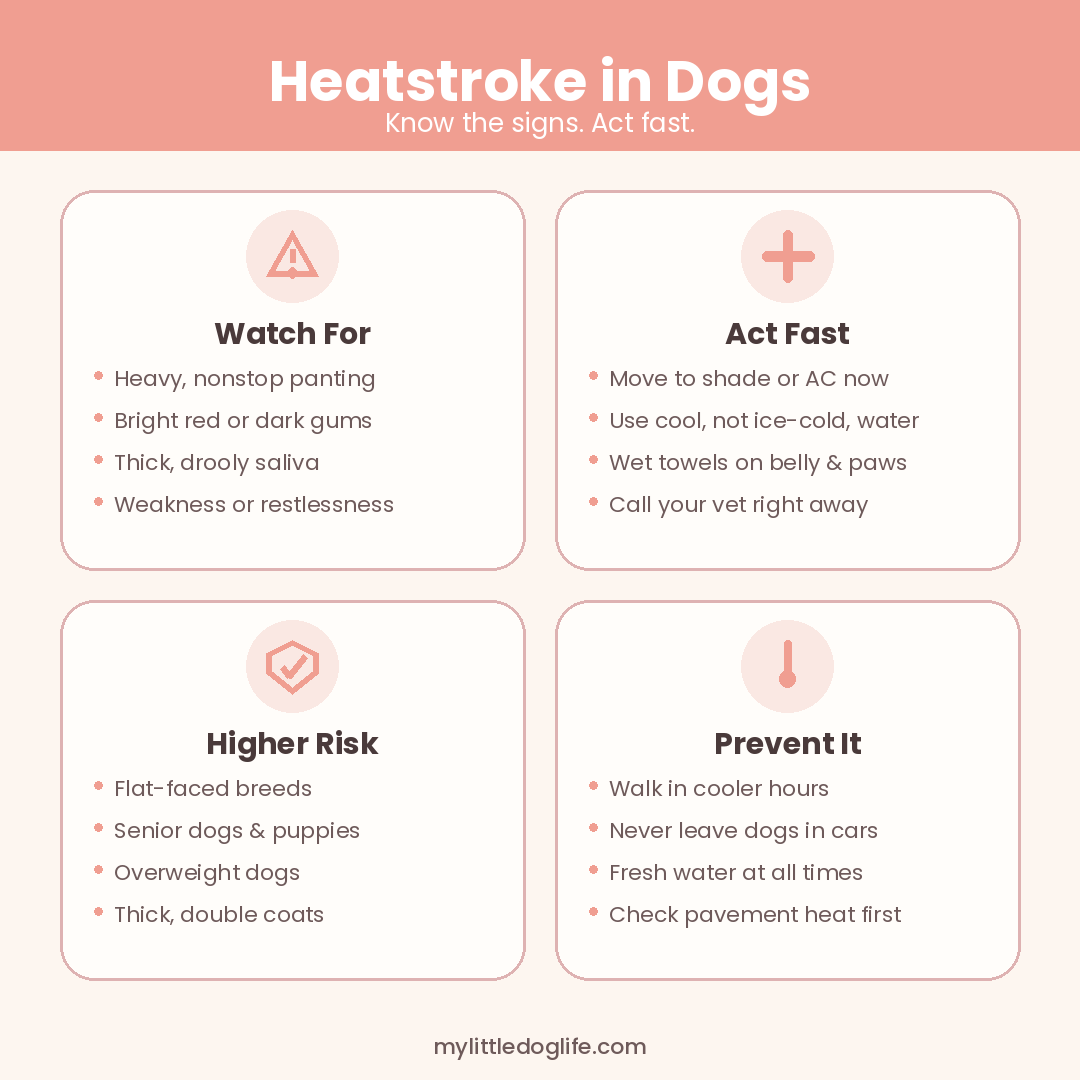
- Heavy, rapid panting that doesn’t slow down
- Bright red or dark red gums and tongue
- Thick, drooly saliva
- Restlessness or noticeable weakness
- Excessive drinking or refusing to move
Severe Signs — Emergency Territory
- Vomiting or diarrhea
- Stumbling, confusion, or collapse
- Seizures
- Pale or blue-tinged gums
- Loss of consciousness
If you see any severe signs, treat this as a true emergency. Call your vet or an emergency animal hospital right away. Start cooling your dog down while you do.
What To Do If You Suspect Heatstroke
Move your dog into shade or air conditioning right away. Next, offer small amounts of cool water, not ice-cold. Ice-cold water can make blood vessels tighten, which slows heat loss.
You can also apply cool, wet towels to your dog’s belly, paws, and neck. A fan speeds up evaporation, too. Even so, a vet check still matters. Organ damage isn’t always obvious right away, even when your dog seems to bounce back fast.
For instance, hydration matters just as much as cooling. Check out how much water a dog should drink daily. Good hydration is one of your dog’s best defenses against overheating.
After a scare, keep a close eye on your dog for the next day or two. On top of that, watch appetite, energy, and bathroom habits closely. Even mild heatstroke can leave a dog feeling off for a while. So, extra rest is a smart precaution afterward.
Who’s Most at Risk
Some dogs face far higher risk than others. Age is one factor. Puppies and senior dogs regulate body temperature less efficiently than healthy adults.
Breed matters, too. For example, flat-faced dogs, thick double-coated breeds like Huskies, and large dogs all overheat faster. Meanwhile, body weight plays a bigger role than most owners realize.
Not sure where your dog stands? This guide on how to tell if your dog is overweight is worth a look before summer peaks. Extra weight raises heatstroke risk quite a bit.
Quick Risk Checklist
- Flat-faced breed (Bulldog, Pug, Boxer, Shih Tzu)
- Senior dog or very young puppy
- Overweight or obese
- Thick or double coat
- Heart or lung condition
- History of heatstroke before
Everyday Prevention That Actually Works
Prevention doesn’t need to be complicated. To begin with, walk your dog during cooler hours. Early morning or after sunset works best in summer.
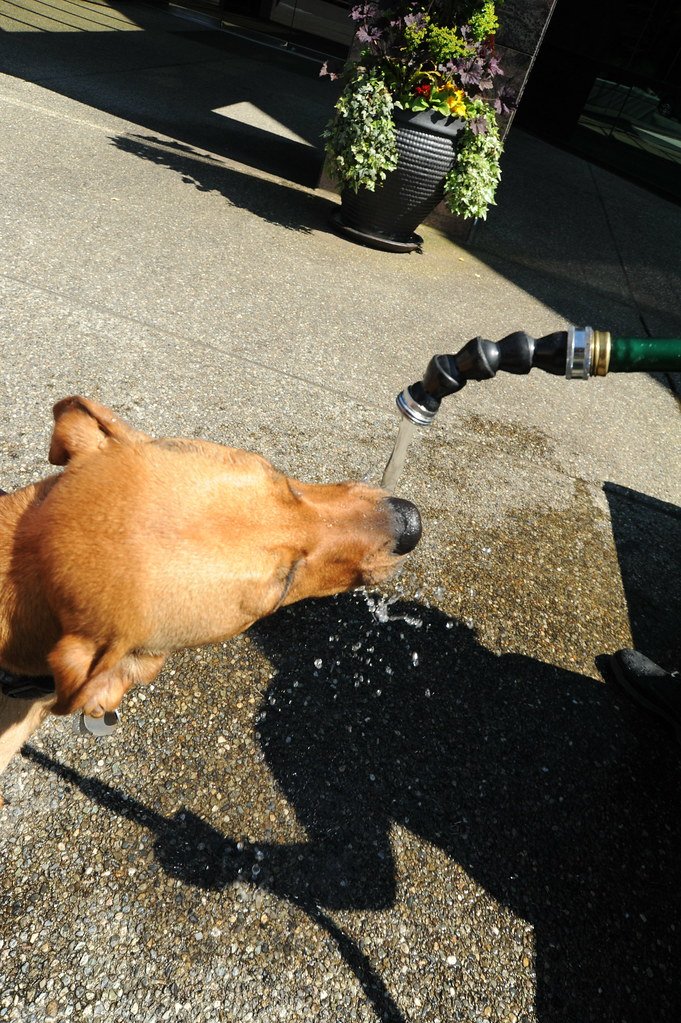
Always provide fresh, cool water outdoors. Then, check it often, since it warms up fast in direct sun. Shade is non-negotiable, too — a yard with no shelter is a real hazard on hot afternoons.
Never leave a dog in a parked car, not even for a quick errand. As a result of trapped heat, car interiors climb to dangerous levels within minutes, even with windows cracked. On top of that, watch the pavement. If it’s too hot for your bare hand, it’s too hot for paw pads.
Skin and coat health matter here, too. Dogs with irritated skin or matting often struggle more in the heat. So, keeping up with grooming and watching for issues like hot spots is a smart summer habit.
Traveling in summer needs extra planning, too. First, bring water and a collapsible bowl on every trip. Then, plan rest stops in shaded areas. Never rely on a cracked window to keep a car cool.
Common Mistakes
Even careful owners slip up sometimes. So, here are the mistakes we see most often.
- Assuming a shady yard is automatically safe — dogs still need constant water and rest breaks
- Using ice-cold water or ice packs directly on skin, which can slow proper cooling
- Waiting to see if symptoms “pass” before calling a vet
- Exercising a dog during the hottest part of the day, even briefly
- Ignoring how vulnerable flat-faced or senior dogs are during heat waves
Expert Tips
These extra tips come from experienced owners and trainers. In other words, they go beyond the basics, but they’re just as easy to use.
- Freeze a wet towel and let your dog lie on it during peak afternoon heat
- Keep a pet-safe electrolyte solution on hand for very active dogs
- Trim excess fur on double-coated breeds, but never shave down to the skin
- Test pavement temperature with your palm before every summer walk
- Know your nearest emergency vet clinic before you ever need it
Frequently Asked Questions
Can heatstroke in dogs happen even in the shade?
Yes, it can. Humidity, poor air flow, and your dog’s own body condition all matter. As a result, shade alone doesn’t guarantee safety, so always pair it with water and rest breaks.
How fast can heatstroke set in?
It can happen in just 10 to 15 minutes in extreme conditions. This is especially true inside a parked car. Because of this, quick action always beats a wait-and-see approach.
Are some dog breeds more likely to get heatstroke?
Definitely. Flat-faced breeds, thick-coated dogs, and overweight dogs all face higher risk. That said, any dog can overheat in the right conditions, so every owner needs to stay alert.
Should I give my dog ice water during a heat wave?
Generally speaking, cool water works better than ice-cold water for an overheating dog. Ice-cold temperatures can slow the cooling process. So, lukewarm-to-cool water is the safer choice.
Summary
Heatstroke in dogs is serious, but it’s also very preventable with a little planning. Watch for early signs like heavy panting and bright red gums. Act fast if things escalate.
Ultimately, knowing your dog’s personal risk factors helps you stay ahead of most emergencies. In other words, breed, age, weight, and coat type all play a part. When in doubt, always lean toward caution and call your vet.
References
PawLife is written and edited by a dog owner who researches every topic using veterinary and canine-behavior sources (AKC, AVMA, ASPCA) before publishing. We are not veterinarians — this article is for general information only and is not a substitute for professional veterinary advice. Always consult your vet about your dog's specific health or behavior needs. Learn more about us.