A puppy vaccination schedule is the single most important health plan you’ll set up in your dog’s first year. It protects against diseases that can be deadly for young puppies.
Getting the timing right matters as much as the shots themselves. In fact, most puppies need several rounds of shots between six and sixteen weeks old. After that, your dog moves onto a much simpler adult schedule.
Why the Puppy Vaccination Schedule Matters
Young puppies get some protection from their mother’s milk. That said, this protection fades fast. As a result, there’s a window where a puppy’s immune system isn’t strong enough yet. It can’t fight off serious viruses alone.
That’s exactly why vets space shots out over several visits. In other words, each booster closes the gap a little more. Meanwhile, your puppy is out meeting the world, so good timing really does matter here.
Skipping or delaying shots isn’t just a paperwork issue, either. For instance, diseases like parvovirus spread easily in parks and on sidewalks. Even a quick trip to the pet store can carry some risk. So, a missed appointment can leave a real gap at the worst possible time.
This is also a season of firsts for your puppy. First comes crate training, then basic house manners. Vet visits fit right into that same routine. Generally speaking, most puppies handle the visits just fine with a little patience and some treats.
Core Vaccines Every Puppy Needs
Most vets follow a similar core lineup. Even so, brand names vary by clinic, but the basics stay the same. The DHPP shot is the backbone of it, and it covers four diseases at once.
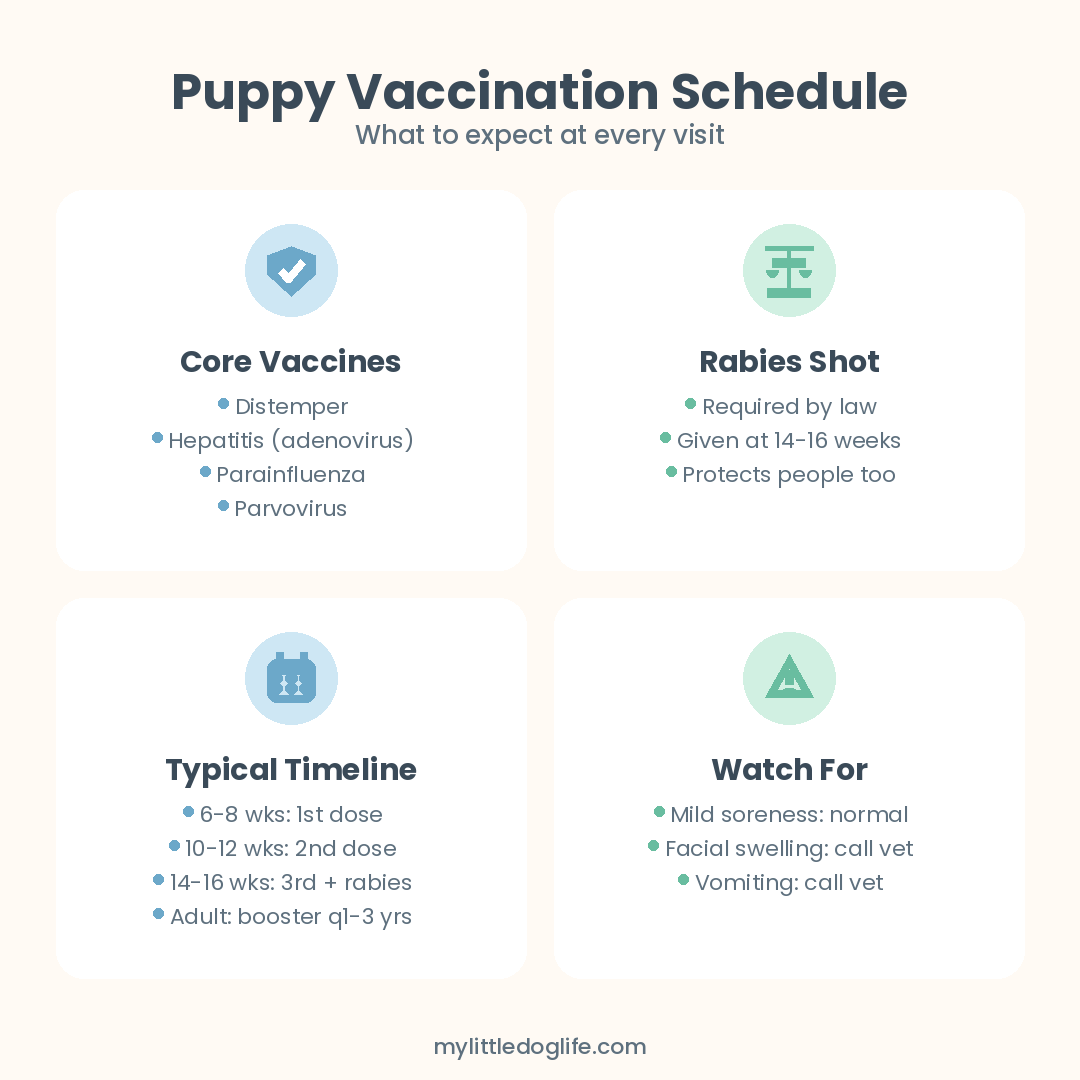
- Distemper: A serious virus that attacks the nervous system, lungs, and gut.
- Hepatitis (adenovirus): A virus that affects the liver and other organs.
- Parainfluenza: A respiratory virus that spreads quickly between dogs.
- Parvovirus: A highly contagious gut virus, especially risky for puppies.
Rabies is the other core vaccine. It’s required by law in most US states, plus much of Canada and the UK. Because rabies can affect humans too, this one isn’t optional the way some others are. Your vet will confirm exactly when your local rules require it.
Some puppies get a bit sleepy or sore at the injection site for a day. That’s generally normal. However, facial swelling, hives, vomiting, or trouble breathing after a shot needs a call to your vet right away. These signs can point to an allergic reaction.
A Typical Vaccination Timeline, Week by Week
Every vet’s exact schedule looks a little different, and that’s fine. Here’s a general timeline most puppies in the US follow.
| Puppy Age | What Usually Happens |
|---|---|
| 6 to 8 weeks | First DHPP dose, general wellness check |
| 10 to 12 weeks | Second DHPP dose, lifestyle vaccines discussed |
| 14 to 16 weeks | Third DHPP dose, first rabies vaccine |
| 12 to 16 months | First adult booster round |
| Every 1 to 3 years | Ongoing boosters, based on vaccine and local law |
Notice how the schedule leans on repeated early doses. That’s because a single shot at eight weeks might get blocked by leftover maternal antibodies. As a result, the follow-up doses make sure the protection actually sticks.
Non-Core Vaccines Your Vet Might Suggest
Beyond the core lineup, some vaccines depend on where you live. Others depend on how your puppy spends its time. Generally speaking, these extras are called lifestyle vaccines.
- Bordetella: Protects against kennel cough. Useful for puppies headed to daycare or dog parks.
- Leptospirosis: Often recommended near standing water, wildlife, or farmland.
- Canine influenza: Worth asking about if your puppy will be around many other dogs.
- Lyme disease: Commonly suggested in tick-heavy regions.
Your vet knows local disease risks better than any general checklist. So, this conversation is worth having at every visit. On top of that, this is a good time to ask about diet too. That’s because a puppy’s dental health needs shift once those adult teeth start coming in.
Puppy visits often double as a check-in on behavior. For instance, biting and nipping come up a lot at this age. If it’s become a real struggle at home, this guide on how to stop puppy biting can help. It covers the same gentle, reward-based approach most vets recommend.
Common Mistakes
- Skipping the final puppy dose: The 14 to 16 week shot matters most, since it works past leftover maternal antibodies.
- Socializing too much, too soon: Early dog parks raise real exposure risk.
- Assuming one shot covers everything: Core vaccines need the full series, not just one visit.
- Losing track of dates: So, a missed booster can mean restarting part of the series.
- Ignoring reaction symptoms: Mild soreness is normal, but facial swelling or vomiting is not.
Expert Tips
- Keep a simple written or phone record of every vaccine date and type. You’ll need it for boarding and daycare later.
- Ask your vet which lifestyle vaccines actually fit your area. There’s no need to request every option available.
- Book puppy visits for calmer times of day. As a result, a relaxed puppy handles the appointment much better.
- Bring treats and use positive reinforcement during the visit. So, this helps your puppy link the vet with good things.
- Stick with one clinic when you can. Because of this, a consistent vet notices subtle changes over time.
Frequently Asked Questions
When should a puppy get its first vaccine?
Most puppies get their first shots around six to eight weeks old. Even so, exact timing can shift a bit depending on the puppy’s health and your vet’s preferred protocol.
Is it safe to take my puppy outside before the vaccine series is finished?
Short, low-risk outings are generally fine. For example, your own yard or a trusted friend’s home both work well. However, busy dog parks and pet stores are best saved for later.
What happens if we miss a scheduled vaccine appointment?
A short delay usually isn’t a crisis. That said, your vet may need to restart part of the series if too much time passes. Because of this, it’s worth calling to reschedule quickly.
Do adult dogs still need regular vaccines?
Yes, adult dogs need periodic boosters too. Generally speaking, the schedule spreads out to every one to three years for many vaccines. Your vet sets the right interval based on local law.
Summary
A puppy vaccination schedule doesn’t have to feel complicated. Here’s the pattern: a few core doses early on, then a rabies shot around fourteen to sixteen weeks. After that, simple boosters last for life. Because timing affects how well the vaccines work, sticking close to your vet’s dates is worth the effort. Ultimately, a little organization now means fewer health worries later.
References
- American Veterinary Medical Association
- Centers for Disease Control and Prevention
- American Kennel Club
PawLife is written and edited by a dog owner who researches every topic using veterinary and canine-behavior sources (AKC, AVMA, ASPCA) before publishing. We are not veterinarians — this article is for general information only and is not a substitute for professional veterinary advice. Always consult your vet about your dog's specific health or behavior needs. Learn more about us.
Pingback: How to Socialize a Puppy: 7 Simple Steps - PawLife
Pingback: Crate Training for Puppies: The Complete Guide - PawLife